 Hatha Yoga
Yoga for Sciatica: Gentle Poses, What to Skip, and When to See a Doctor
Hatha Yoga editorial team · Updated · 7 min read
Sciatica is the pain that starts in your buttock and shoots down the back of your leg, sometimes all the way to your foot. Most people with sciatica can do some yoga, but clear it with your doctor first: sciatica has several possible causes, and the cause decides which poses suit you.
Below are gentle poses, two routines from the app, the poses to leave out, and the warning signs that need care right away.
Can you do yoga with sciatica?
The sciatic nerve runs from your lower back through the buttock and down to the foot. When something presses on it or irritates it, you may feel burning or shooting pain in the leg, pins and needles, numbness, sometimes weakness.
According to the NHS, the most common cause is a slipped (herniated) disc. Narrowing of the spinal canal, a slipped vertebra or a back injury are less common culprits.
Sciatica usually settles within a few weeks to a few months, though it can drag on and come back. The NHS advises keeping up your normal activities as far as you can, starting gentle exercise early, and not sitting or lying down for long stretches. Moving may hurt, but the movement itself doesn't harm your back.
Research on yoga for sciatica specifically is thin. A small randomized trial from 2015 enrolled 61 adults with low back pain or sciatica and confirmed disc bulges or extrusions. Half did a three-month yoga course designed with disc problems in mind; the rest received usual medical care.
At three months, the yoga group reported less disability in daily life, scoring 3.3 points lower on the Roland-Morris questionnaire. The other outcomes showed no significant difference, and no adverse effects of yoga were reported.
It was an exploratory trial, so the authors' conclusion is cautious: well-chosen yoga can be safe and helpful for people with these disc problems. That's no reason to skip an exam. First find out from your doctor what is behind the pain and which movements are right for you now.
Sciatica warning signs: when to get help right away
Call 911 or go to the emergency room if:
- you have sciatica in both legs;
- weakness or numbness in both legs is severe or getting worse;
- the skin around your anus or genitals feels numb;
- you have trouble starting to pee, can't pee, or can't control your bladder or bowels, and this is new for you.
Book a regular appointment if a few weeks of self-care bring no relief, the pain grows, or it keeps you from your usual activities. Pain that began after a fall or a blow to the back also needs a checkup.
How to do yoga safely with sciatica
- Let the leg pain guide you. A gentle stretch in the muscles is fine. If pain shoots further down the leg, travels below the knee, or numbness grows, ease out of the pose straight away.
- Start on the floor. Poses on your back or on hands and knees load the lower back less than standing poses, so begin there.
- Keep the range small. Move slowly, with the exhale, and avoid bouncing or jerky movements.
- Be wary of straight-leg folds. Seated and Standing Forward Folds put a strong pull on the back of the leg. If your leg pain gets worse afterward, leave them out.
- Don't stay in bed. A short practice and a walk a few times a day beats an hour on the mat followed by a day in the armchair.
- Little and often. Ten to 15 minutes daily or every other day is plenty. If your leg hurts more the morning after practice than it did before, cut back the sequence and show it to your doctor or physical therapist. If you feel better, add one pose at a time.
Gentle yoga poses for sciatica
Ease the lower back
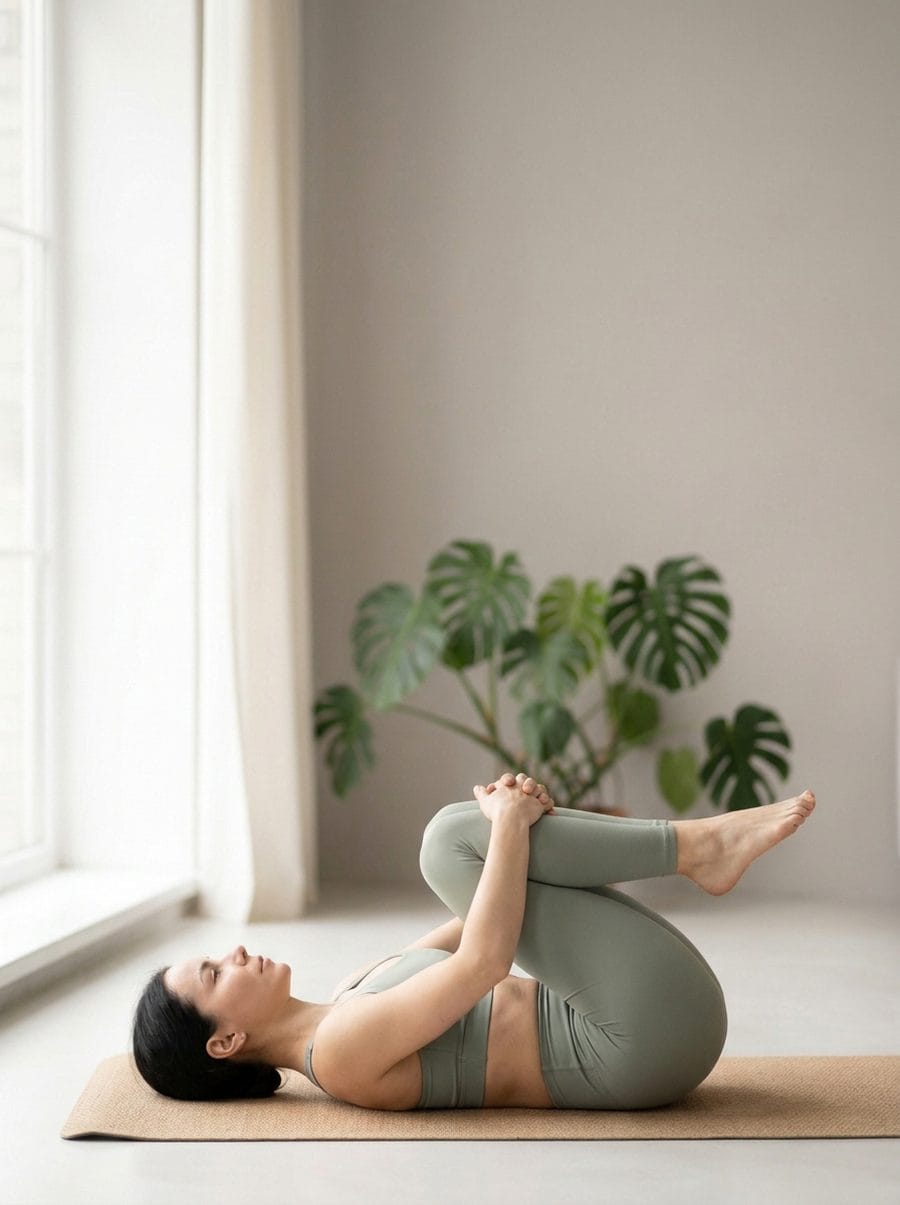
Knees-to-Chest Pose lets your lower back spread along the floor, and rocking gently side to side massages it. Tabletop to Child's Pose Flow rocks the spine without your body weight bearing down on it. Hip Circles are done standing, so save them for days when standing no longer hurts.


Buttock and back of the leg
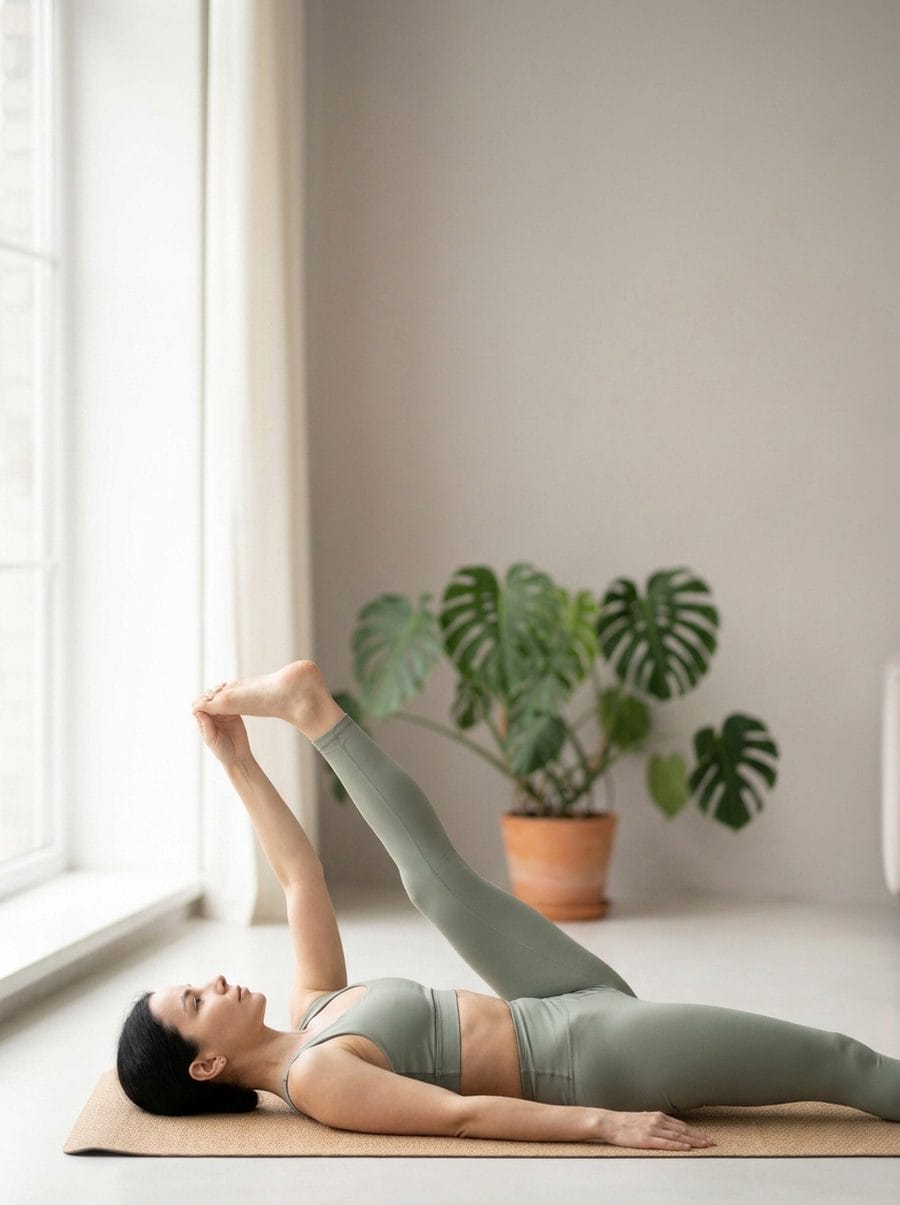
Supine Twist with Eagle Legs stretches the outer hip and buttock, a gentle option if you were searching for yoga for piriformis pain. If your sciatica comes from a lumbar disc herniation, the app advises twisting more gently. In Reclining Hand-to-Big-Toe Pose, loop a strap around your foot if your back lifts off the floor.
If raising the straight leg brings pain below the knee, skip this pose.

Rest
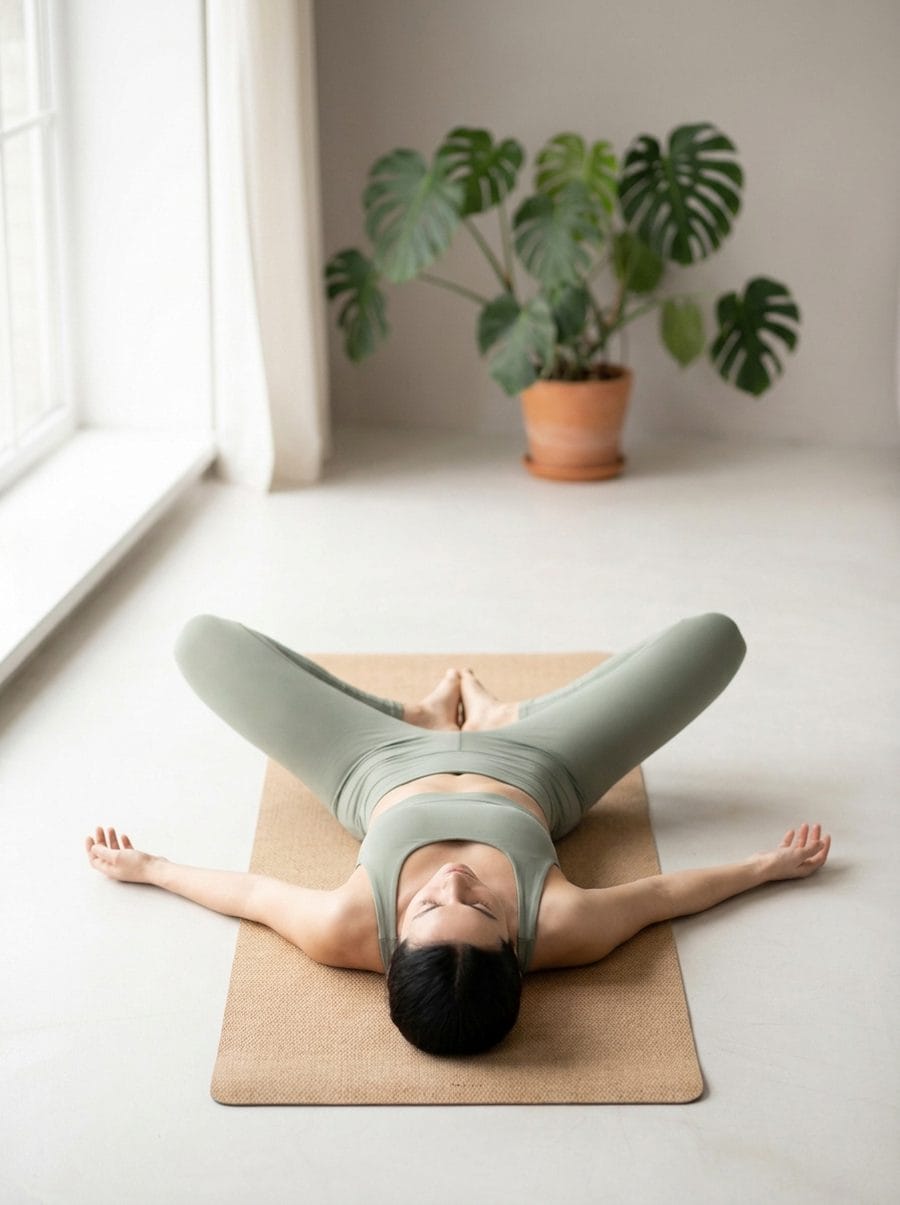
In Crocodile Pose your forehead rests on your folded forearms, and your breath gently rocks the lower back. Reclining Butterfly Pose and Relaxation Pose give your back muscles a chance to let go.


Lower Back After Sitting: a 15-minute routine
This app program has 14 steps: after Hip Circles, done standing, everything happens on the floor. It's a good base for sciatica once you take out a few poses.
- Skip with a lumbar disc herniation: Supine Twist Flow and Locust Flow. In the app, both poses carry this limit with no qualifier.
- Leave out Bridge Flow until a flare-up in your lower back settles.
- Do Supine Twist with Eagle Legs more gently with a disc herniation, as the app suggests.
- In Low Lunge, keep the torso upright and the backbend shallow whenever your lower back is sore.
In the evening: Before Bed
When your leg is tired at the end of the day and you just want to lie down, try the 10-minute Before Bed program: six reclining poses, ending with almost three minutes of Relaxation Pose. During an acute disc herniation, drop Supine Twist from it.
Legs-Up-the-Wall Pose is one to drop as well if the app flags apply to you: menstruation, glaucoma, or blood pressure that isn't under control.
Safety: yoga poses to avoid with sciatica
The app has no separate "sciatica" flag. Go by the cause your doctor has named.
- Lumbar disc herniation: leave out backbends on your stomach (Cobra Pose, Locust Pose and their flow versions), Upward-Facing Dog, Seated Forward Fold, Boat Pose and Half Boat Pose, and Supine Twist Flow. Standing Forward Fold is fine if you bend your knees.
- With spinal disc herniations in general, the app also rules out Seated Twist, Bow Pose and Camel Pose.
- With acute lower back pain, Sphinx Pose, Side Bend Flow and Mountain Pose with Side Bend are off the list.
- In a flare-up, put Bridge Pose, Triangle Pose and Chair Pose on hold.
For how back poses work and the order to do them in, see Yoga for Back Pain. General rules are gathered on the Safety and Contraindications page.
Pose cautions in this article
- Pregnancy from the second trimester onward — take your knees wider than your belly or skip the pose (Knees-to-Chest Pose)
- Knee injuries — place a blanket under your knees (Tabletop to Child's Pose Flow)
- Lumbar disc herniation — go more gently (Supine Twist with Eagle Legs)
- Use a strap if your back lifts off the floor (Reclining Hand-to-Big-Toe Pose)
- Pregnancy from the second trimester onward — the pose is done lying on the belly (Crocodile Pose)
- Groin discomfort — place supports under your knees (Reclining Butterfly Pose)
This site is for general information and is not medical advice. If you have pain, an injury, a chronic condition, or are pregnant, check with a qualified professional before practicing.
Questions
Can I do yoga with sciatica? Usually yes, once your doctor has ruled out serious causes. Start with poses lying down, and come out of any pose that makes your leg pain worse.
What yoga poses should you avoid with sciatica? Anything that sharply increases the pain in your leg. If a lumbar disc herniation is the cause, the app rules out backbends on the stomach, Seated Forward Fold, Boat Pose and Supine Twist Flow.
Is yoga good for piriformis syndrome? Many people tolerate a gentle buttock stretch, such as Supine Twist with Eagle Legs, well. But sciatica most often comes from a disc rather than a muscle, so choose your exercises together with your doctor.
How long does sciatica last? Usually a few weeks to a few months, sometimes longer. It can come back, so regular movement is worth keeping up even after the pain is gone.
Sources
- NHS. Sciatica. National Health Service, page reviewed in 2024.
- Monro R, et al. Disc extrusions and bulges in nonspecific low back pain and sciatica: Exploratory randomised controlled trial comparing yoga therapy and normal medical treatment. Journal of Back and Musculoskeletal Rehabilitation, 2015.
- Pose technique and cautions, and sequence contents: the Hatha Yoga app. More on the How We Prepare Our Content page.
Read next
- Yoga for Arthritis and Osteoporosis: How to Protect Your Joints and Bones7 min read
- Ashtanga Yoga Explained: The Series, the Breath and the Difference from Hatha6 min read
- Ayurveda Explained Simply: The Basics and a Daily Routine (Dinacharya)5 min read
- Balance Exercises: 10 Yoga Poses for Balance and Stability7 min read