 Hatha Yoga
Revolved Wide-Legged Forward Fold
Parivṛtta Prasārita Pādottānāsana
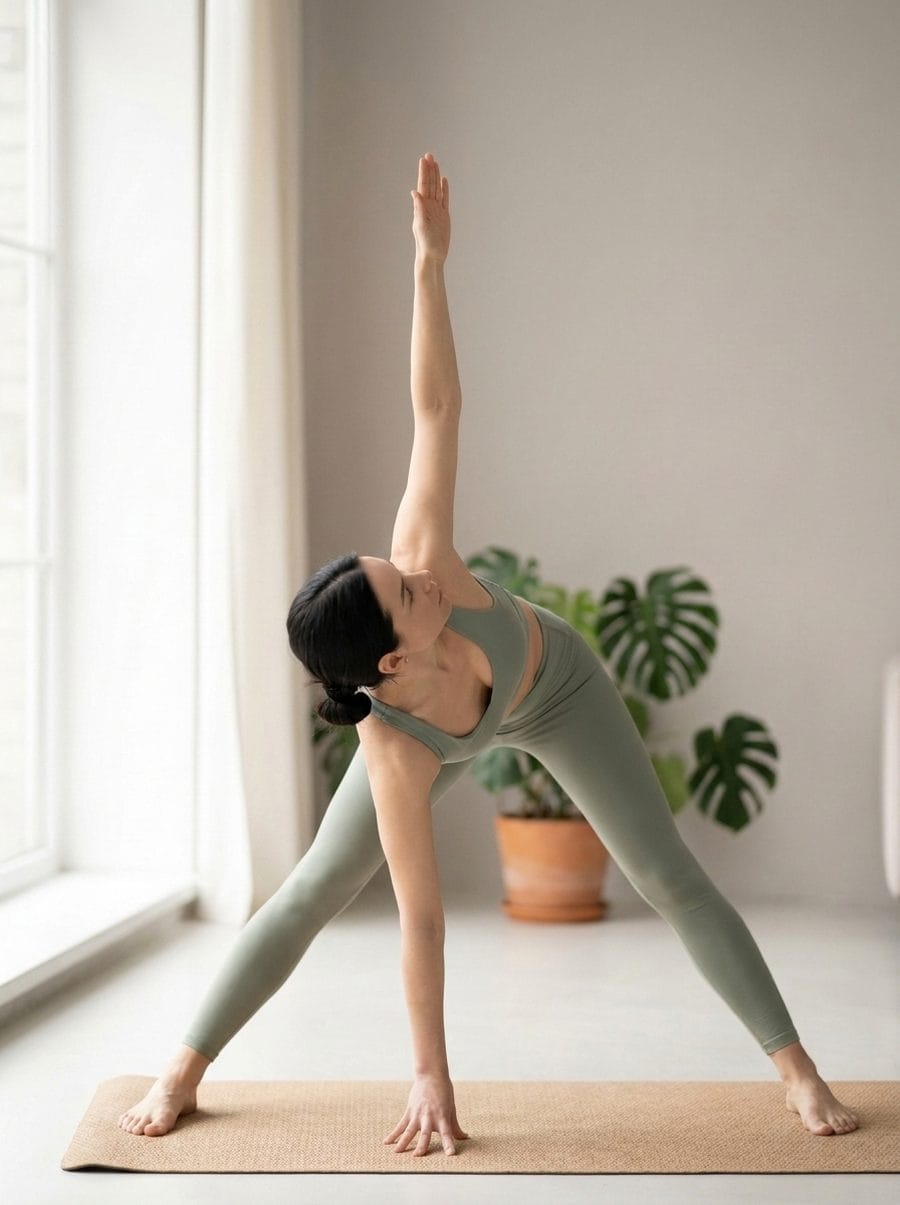
Parivrtta Prasarita Padottanasana, the Revolved Wide-Legged Forward Fold, blends two movements into one. Your feet are set wide, your torso hinges down toward the floor, and from that fold your chest swings open to the side as one arm reaches for the ceiling.
It's an intermediate pose. None of the app's programs include it; it exists only as a pose-library entry, holding 25 seconds to each side.
A variation of: Wide-Legged Forward Fold
How to do it
- EnterIn a wide-legged forward fold, place one hand on the floor at the center. Reach the other arm toward the ceiling as you twist your torso.
- HoldKeep your hips level and both feet firmly on the floor. Twist from your upper back and keep your neck free.
- ExitBring your hand back down and twist to the other side.
More detail
Build the basic Wide-Legged Forward Fold first: feet roughly one leg-length apart, toes turned in slightly, spine long. Plant the supporting hand under your breastbone, centered between your feet rather than under your shoulder, so your torso pivots around the spine itself.
When the floor feels out of reach, slide a block under that palm. Move in two beats: the inhale lengthens your back, the exhale adds rotation. Rest the free hand on your sacrum at first and send it skyward after the chest has rotated. The outer edges of both feet stay anchored the whole time.
Benefits
A twist on a stable, wide base.
Hamstrings and inner thighs get a long stretch while the upper (thoracic) spine rotates. A wide stance gives you a dependable base, so twisting here feels calmer than in standing twists on a narrow footprint. Once it's familiar, Revolved Triangle Pose, with the feet closer together, becomes easier to approach.
Cautions
- Lumbar disc herniation
- High blood pressure
This site is for general information and is not medical advice. If you have pain, an injury, a chronic condition, or are pregnant, check with a qualified professional before practicing.
Common mistakes
- Letting your hips turn with your shoulders. The pelvis stays put; the rib cage does the rotating.
- Hunching to get your palm on the floor. A block under the hand beats a rounded back.
- Cranking your head toward the raised arm. If your neck complains, keep your gaze down.
- Rolling onto the inner edges of your feet. Lift the arches and keep weight on the outer edges.
Similar poses
Questions
What does Parivrtta Prasarita Padottanasana mean? "Parivrtta" means revolved, "prasarita" spread out, "pada" foot, and "uttana" an intense stretch. Put together: a fold with the feet spread wide and the torso turned.
What are the benefits of this twist? Your legs get a long stretch while your upper spine learns to rotate with the hips and feet holding still. The broad base lets you focus on the turn itself rather than on staying upright.
Who should skip the pose? The app names two contraindications: high blood pressure and a herniated lumbar disc. In either case, leave the twist out. The plain wide-legged fold without rotation carries its own note for high blood pressure: don't drop your head low.
Updated: