 Hatha Yoga
Yoga Glossary: What Namaste, Om, Guru, Asana and Prana Mean
Hatha Yoga editorial team · Updated · 6 min read
Your first yoga class comes with a lot of unfamiliar words: namaste, asana, pranayama, savasana. Nearly all of them come from Sanskrit, and each has a simple translation. This glossary will help you follow what the teacher says and decode the pose names.
Inside: what namaste means and how to answer it, words from practice and philosophy, and a key for reading Sanskrit pose names.
Namaste meaning: what it is and how to reply
The word joins "namas" (a bow) and "te" (to you), so it literally means "a bow to you." In India and Nepal, people use it to say hello and goodbye: palms together at the chest, head tilted slightly forward. That gesture is called Anjali mudra, and you can read more about it in Mudras.
In yoga classes, "namaste" is usually said at the end, as a thank-you to the teacher and to each other. You reply with the same word and the same gesture. The popular rendering "the divine in me honors the divine in you" took shape in Western studios: it's a lovely interpretation, but not a translation.
Sanskrit: the language yoga speaks
Sanskrit is an ancient language of India, used for the Vedas, the Upanishads, the Yoga Sutras and the Hatha Yoga Pradipika. It's written in the Devanagari script, and in Latin letters it uses marks such as ā or ṣ for long vowels and special consonants.
Sanskrit belongs to the Indo-European family, so English has relatives among its words. "Matr" is a cousin of "mother," "dva" of "two" and "nava" of "new," while "agni," fire, shares a root with "ignite." That's why some yoga words feel oddly familiar.
The same word can also be spelled in different ways, because there's more than one system for writing Sanskrit sounds in English. You'll see both "Shavasana" and "Savasana," "Vrikshasana" and "Vrksasana." These aren't mistakes, just different conventions.
Yoga practice words
- Yoga. From the root "yuj," to join or yoke. The Yoga Sutras (I.2) say yoga is the stilling of the whirl of thoughts, chitta vritti nirodha.
- Hatha. "Effort, persistence." The popular breakdown into "ha" (sun) and "tha" (moon) explains hatha as a union of opposites. More in What Is Hatha Yoga.
- Asana. "Seat." According to the Yoga Sutras (II.46), a posture should be at once firm and pleasant: "sthira sukham asanam." Today the word covers any yoga pose.
- Pranayama. Breath control, from "prana" and "ayama," extension. For the idea of prana itself, see Prana Energy in Yoga.
- Bandha. "Lock": a gentle muscular engagement, such as lifting the pelvic floor.
- Mudra. "Seal": a hand gesture or a position of the body.
- Drishti. The point where you rest your gaze in a pose.
- Vinyasa. "Placing in a special way": a sequence of movements linked to the breath.
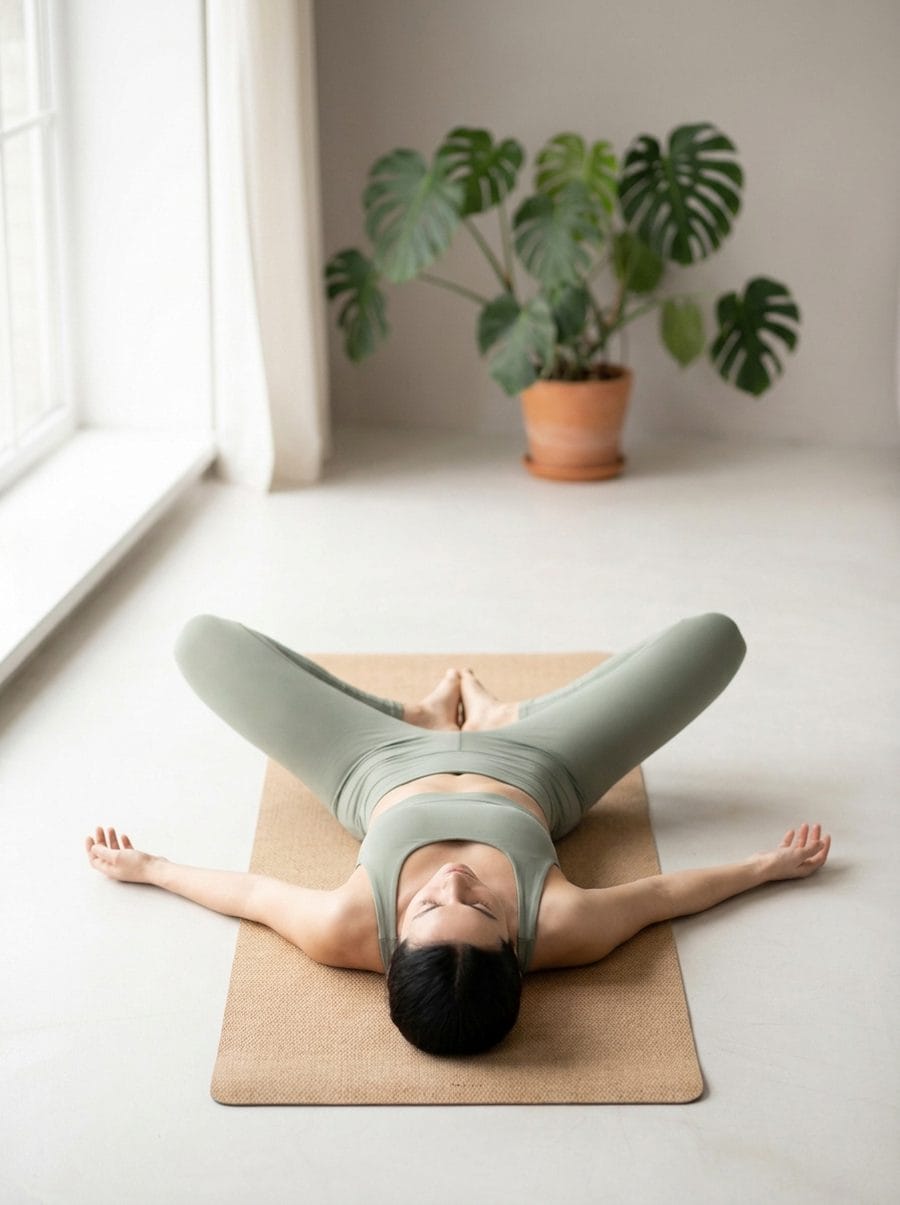
- Savasana. "Corpse pose," the final relaxation. In the app it's called Relaxation Pose.
- Surya Namaskar. "Sun Salutation": a sequence of 12 positions, covered in the Sun Salutation section.
- Shatkarmas. "Six actions": hatha yoga's purification techniques, Trataka and Jala Neti among them. They're gathered in the Shatkarmas section.
- Kriya. "Action": a name for individual cleansing techniques, Agnisara Kriya being one example.
- Sadhana. Your regular personal practice, what you do on the mat day after day.
Yoga philosophy words
- Om. The sacred syllable that opens and closes many classes. How to chant it is explained in Mantras and Om.
- Guru. Literally "heavy, weighty," meaning a teacher whose knowledge carries weight. The well-known breakdown into "gu" (darkness) and "ru" (dispeller) comes from a late Upanishad and is considered folk etymology.
- Karma. "Action," along with the principle that deeds have consequences.
- Dharma. From the root "to hold": order, duty, the right path.
- Ahimsa. Nonviolence, the first of the yama principles. All five are collected in Yama.
- Pratyahara. Withdrawing the senses from the outside world, the fifth limb. It tends to arise on its own in Relaxation Pose.
- Dharana, dhyana, samadhi. Concentration, meditation and complete absorption: the last three of the eight limbs.
- Shanti. "Peace." It's often repeated three times at the end of class.
- Ayurveda. "Knowledge of life": India's traditional medicine, a sister system to yoga.
- Chakra and nadi. "Wheel" and "channel": terms from the subtle-body model, explored in Chakras Explained.
How to read Sanskrit pose names
Pose names are built from simple words. Learn a couple of dozen and you'll understand most of the catalog.
- Tada mountain, vriksha tree, padma lotus, vira hero, bhujanga serpent (cobra).
- Urdhva upward, adho downward, mukha face, shva dog.
- Ardha means "half," eka "one," hasta "hand," and pada "foot" or "leg."
- Supta reclining, baddha bound, kona angle, parivritta revolved, utthita extended.
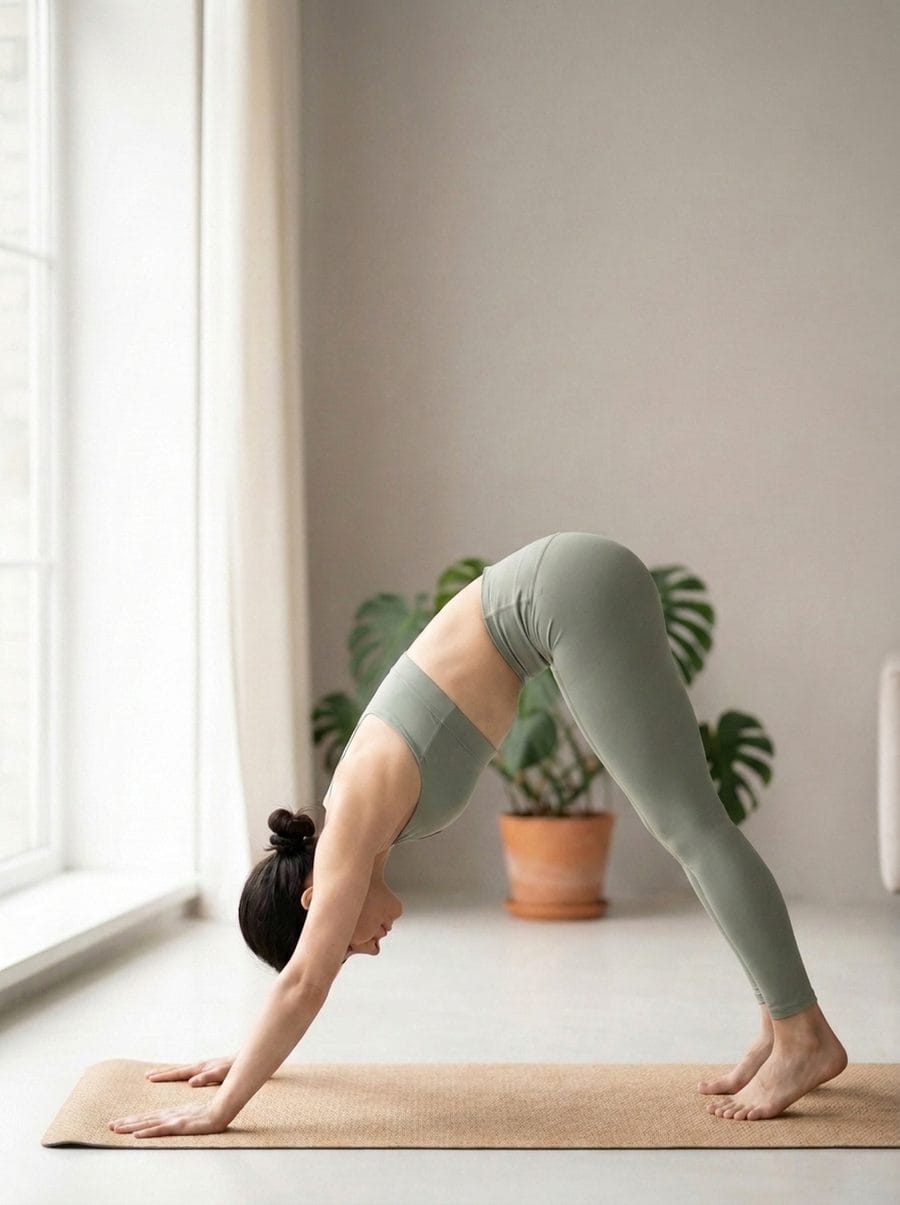
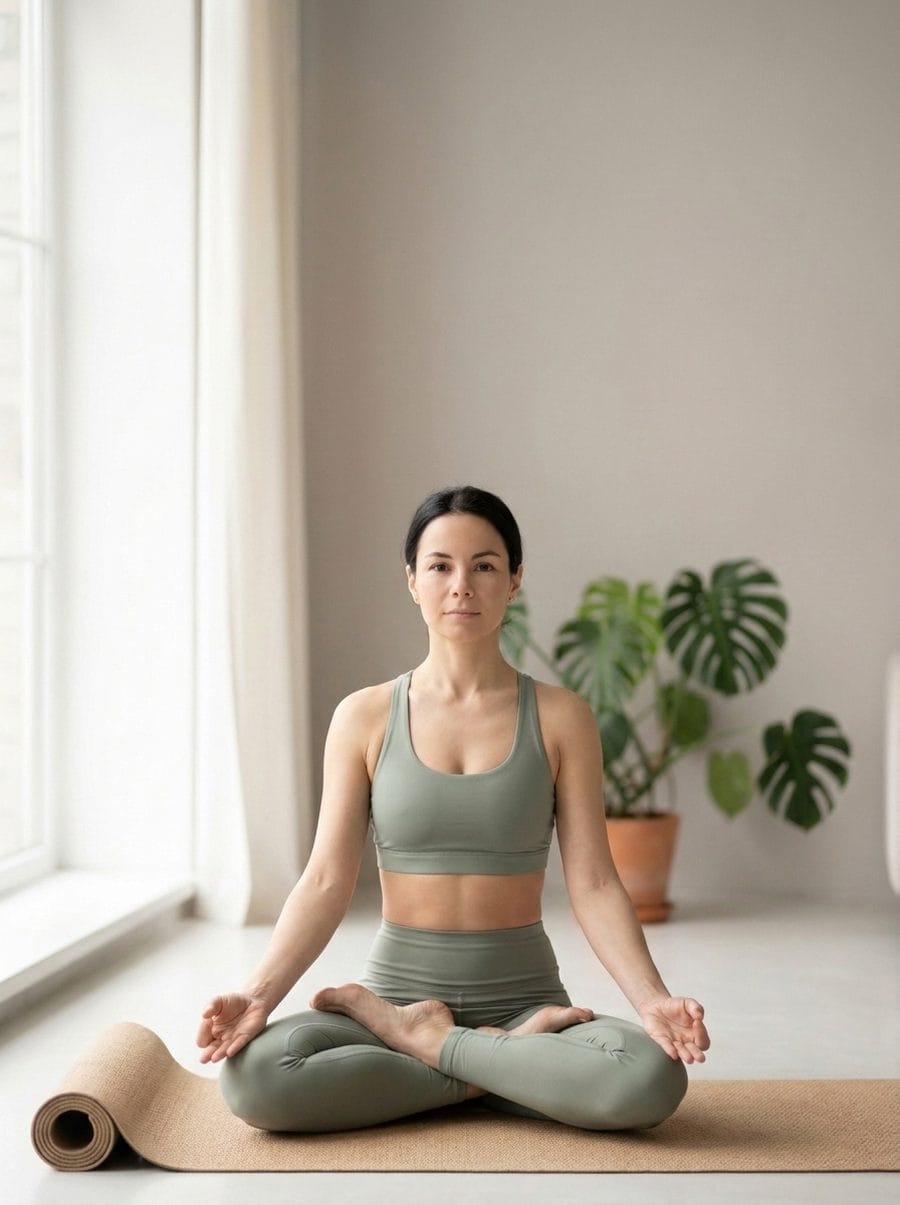
So Adho Mukha Śvānāsana is literally "downward-facing dog pose," Ardha Padmāsana is "half lotus," and Supta Baddha Koṇāsana is "reclining bound angle," known in the app as Reclining Butterfly Pose.

Where to hear these words in action
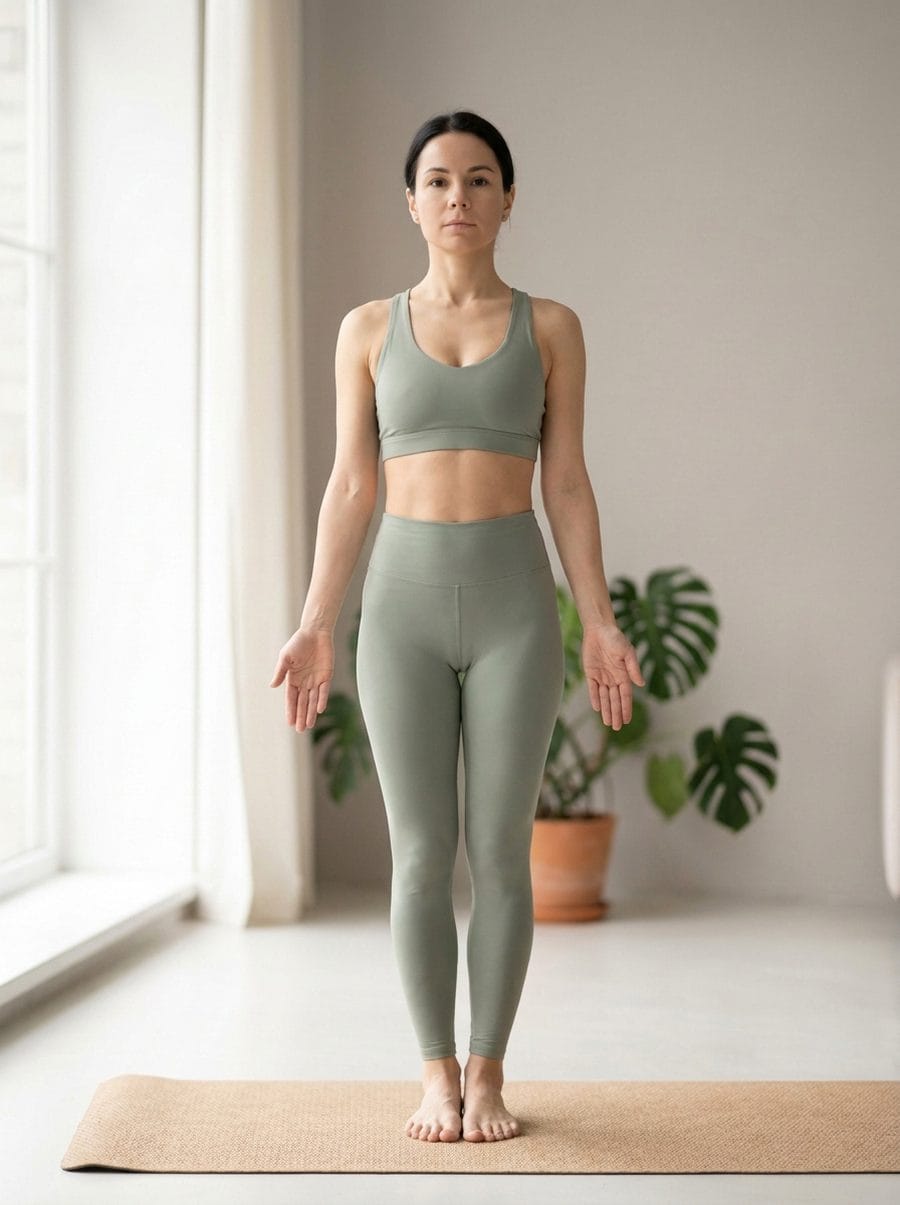
Practice is the best way to make a glossary stick. In the app, First Practice is built for beginners: 15 minutes, 13 poses, from Neck Warm-Up to Relaxation Pose. Along the way you'll meet Mountain Pose, Downward-Facing Dog, Tree Pose and other poses whose Sanskrit names you can now decode. The full catalog lives in the Poses section.
Safety
- Downward-Facing Dog. Glaucoma or hurt wrists and shoulders mean skipping it. With raised blood pressure, make each hold short.
- Forward folds. Standing Forward Fold drops out for anyone whose blood pressure runs high. Seated Forward Fold is skipped when a disc in the lower spine has herniated.
- Neck Warm-Up. Skip it during acute neck pain or dizziness.
- Half Lotus Pose. Are your knees or ankles injured? Then choose a different seat.
Pose cautions in this article
- Wrist and shoulder injuries (Downward-Facing Dog)
- High blood pressure — don't stay in the pose long (Downward-Facing Dog)
- Glaucoma (Downward-Facing Dog)
- Groin discomfort — place supports under your knees (Reclining Butterfly Pose)
- Knee and ankle injuries (Half Lotus Pose)
This site is for general information and is not medical advice. If you have pain, an injury, a chronic condition, or are pregnant, check with a qualified professional before practicing.
Questions
What does namaste mean? Literally "a bow to you." It's a greeting and farewell in India and Nepal; in yoga classes it's said at the end, with palms together at the chest.
How do you reply to namaste? Answer in kind: say namaste back, join your palms in front of the heart and dip your head a little.
What does the word guru mean? From Sanskrit, "heavy, weighty." It's the name for a teacher whose knowledge carries weight.
What language are yoga pose names in? Sanskrit. Many poses also have English names, like Downward-Facing Dog, Mountain Pose and Tree Pose.
Sources
- Patanjali's Yoga Sutras (I.2, II.46) and the Hatha Yoga Pradipika as historical texts, summarized in our own words. Pose names, cautions and the program contents: the Hatha Yoga app. How we verify our texts is explained on the How We Prepare Our Content page.
Read next
- Yoga for Arthritis and Osteoporosis: How to Protect Your Joints and Bones7 min read
- Ashtanga Yoga Explained: The Series, the Breath and the Difference from Hatha6 min read
- Ayurveda Explained Simply: The Basics and a Daily Routine (Dinacharya)5 min read
- Balance Exercises: 10 Yoga Poses for Balance and Stability7 min read