 Hatha Yoga
Chair Yoga: Seated Poses for Seniors and Office Workers
Hatha Yoga editorial team · Updated · 7 min read
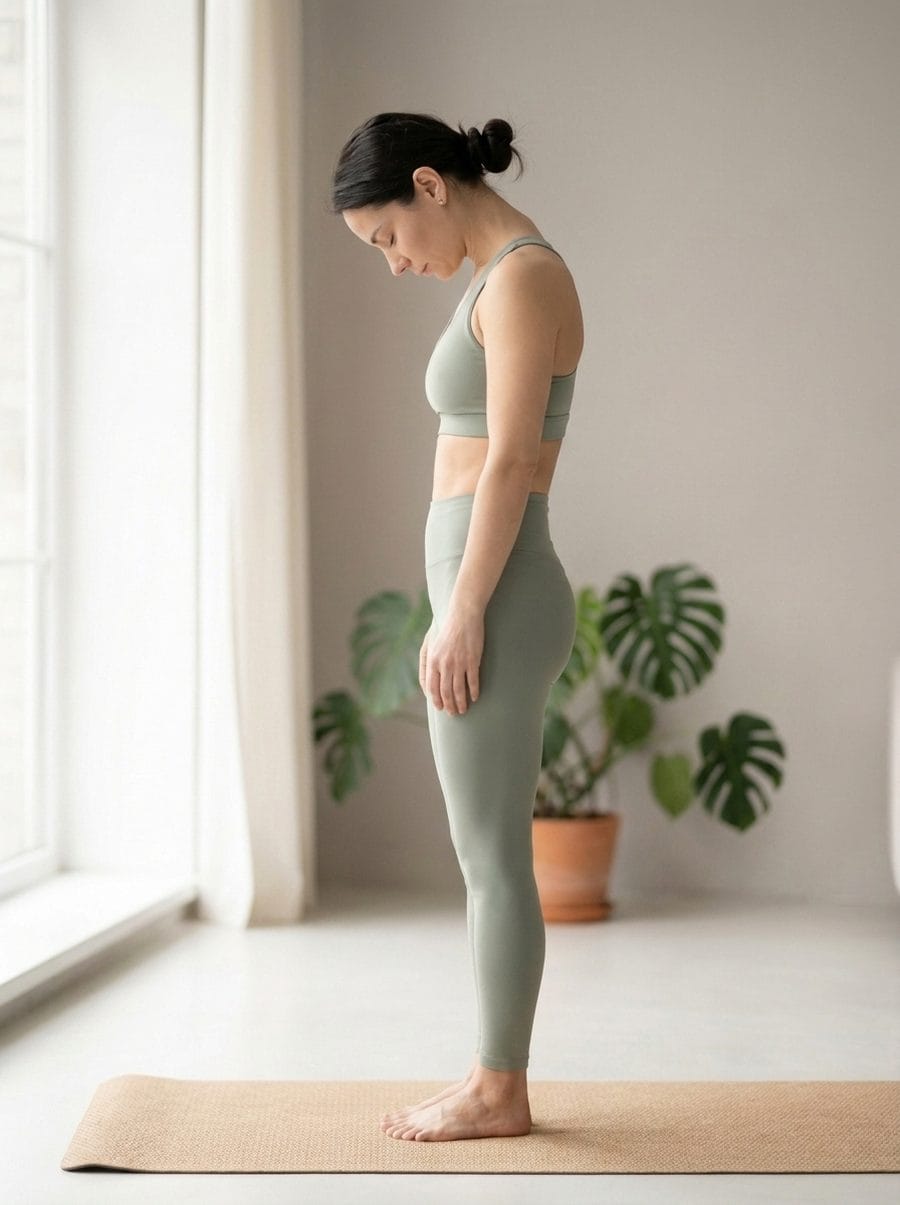
Chair yoga is for anyone who finds it hard, or simply impractical, to get down on a mat: people at the office, older adults, and anyone easing back into movement after an illness. There's no ready-made chair program in the app yet, so we built this routine from real poses in the app, each one adapted to be done seated or standing with a hand on the back of a chair.
Below you'll find 12 exercises, a 10 to 12 minute order, tips on choosing a chair, and safety rules.
Who chair yoga is for
- People who sit at a desk all day. You can do the seated moves in your work clothes without leaving your spot.
- Seniors and anyone who struggles to get up from the floor. The chair gives you support and takes away the fear of losing your balance.
- Beginners with stiff joints or a larger body. Sitting makes it easier to feel how your spine moves.
- People recovering from an injury or illness, once a doctor has cleared them for exercise.
Chair yoga isn't a watered-down imitation. Your spine, shoulders and breathing do the same work as on a mat; only the support changes.
How to choose a chair and sit on it
Pick a sturdy chair with no wheels. Armrests get in the way of your arms, so a plain chair without them works best. It should be the right height for your feet to rest flat on the floor with your knees bent at roughly a right angle. Britain's NHS recommends the same setup for seated exercise.
Scoot toward the front edge of the seat and don't lean on the backrest. Feel your sit bones underneath you and place your feet hip-width apart. Grow tall through the crown and soften your shoulders down. This is your starting position for every exercise below.
Seated chair yoga poses
Neck, shoulders and wrists
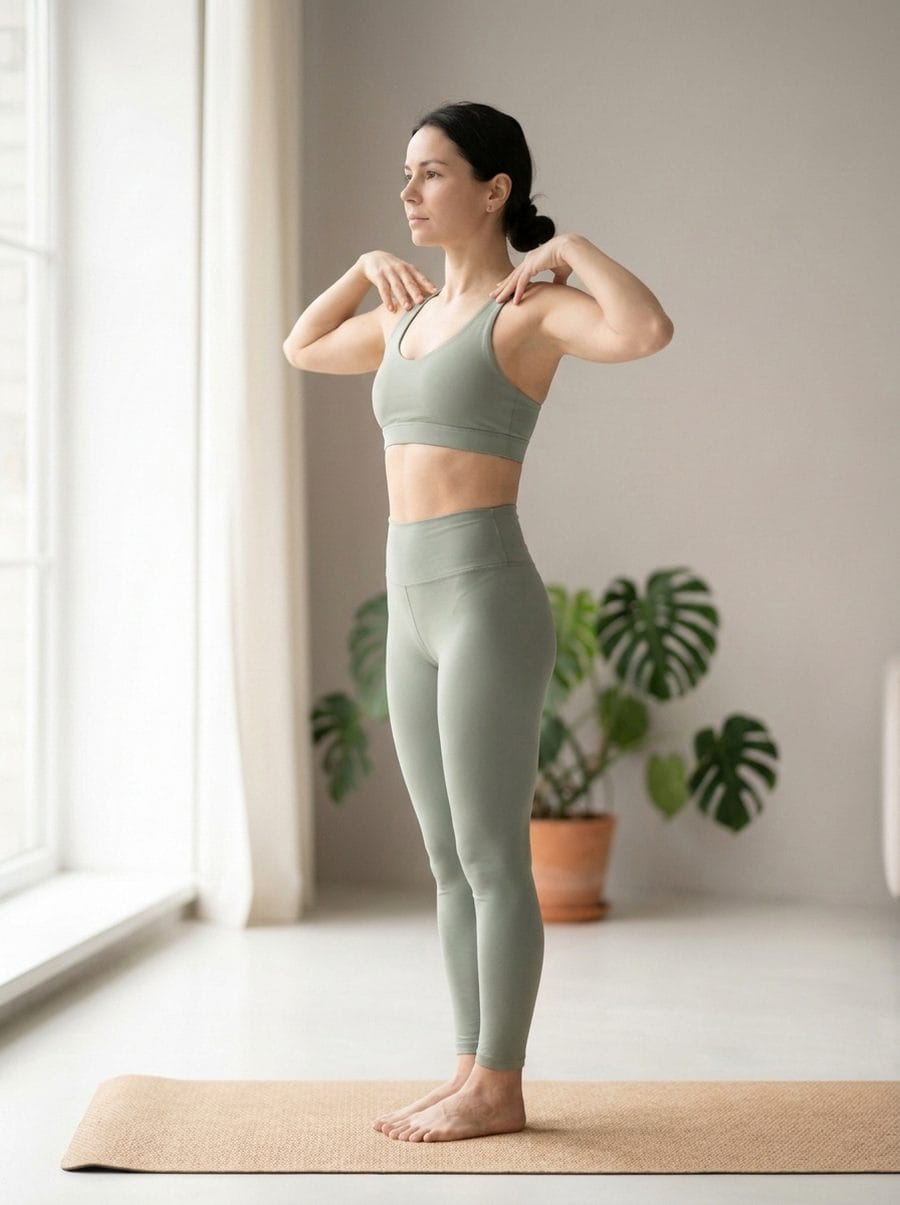
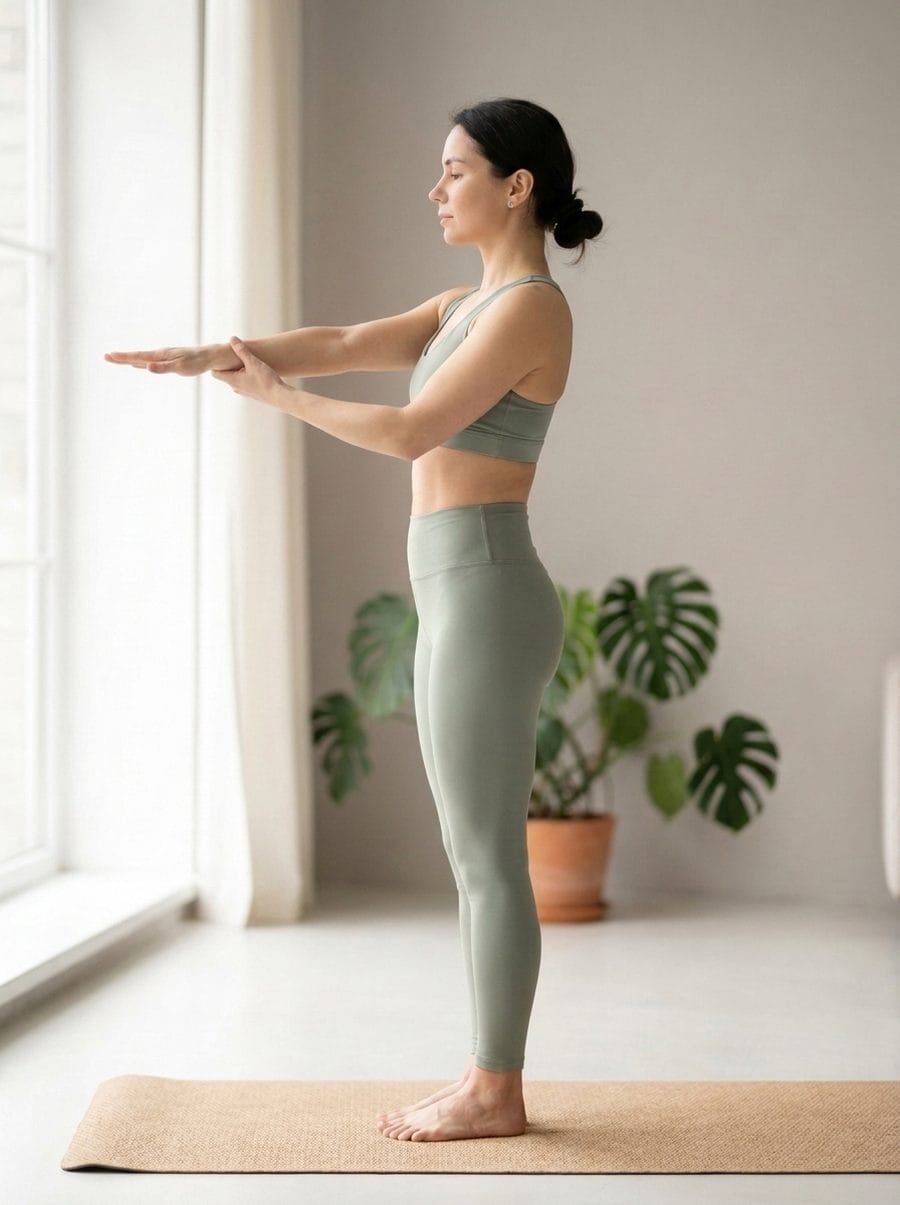
The app's Neck Warm-Up works perfectly in a chair: slowly sweep your chin in a half circle from one shoulder to the other, never dropping your head back. Shoulder Rolls trace wide circles in time with your breath. For the Wrist Warm-Up, reach your arms forward, circle your fists both ways, then gently draw your fingers back toward you.
Reach, side bends and seated Cat-Cow
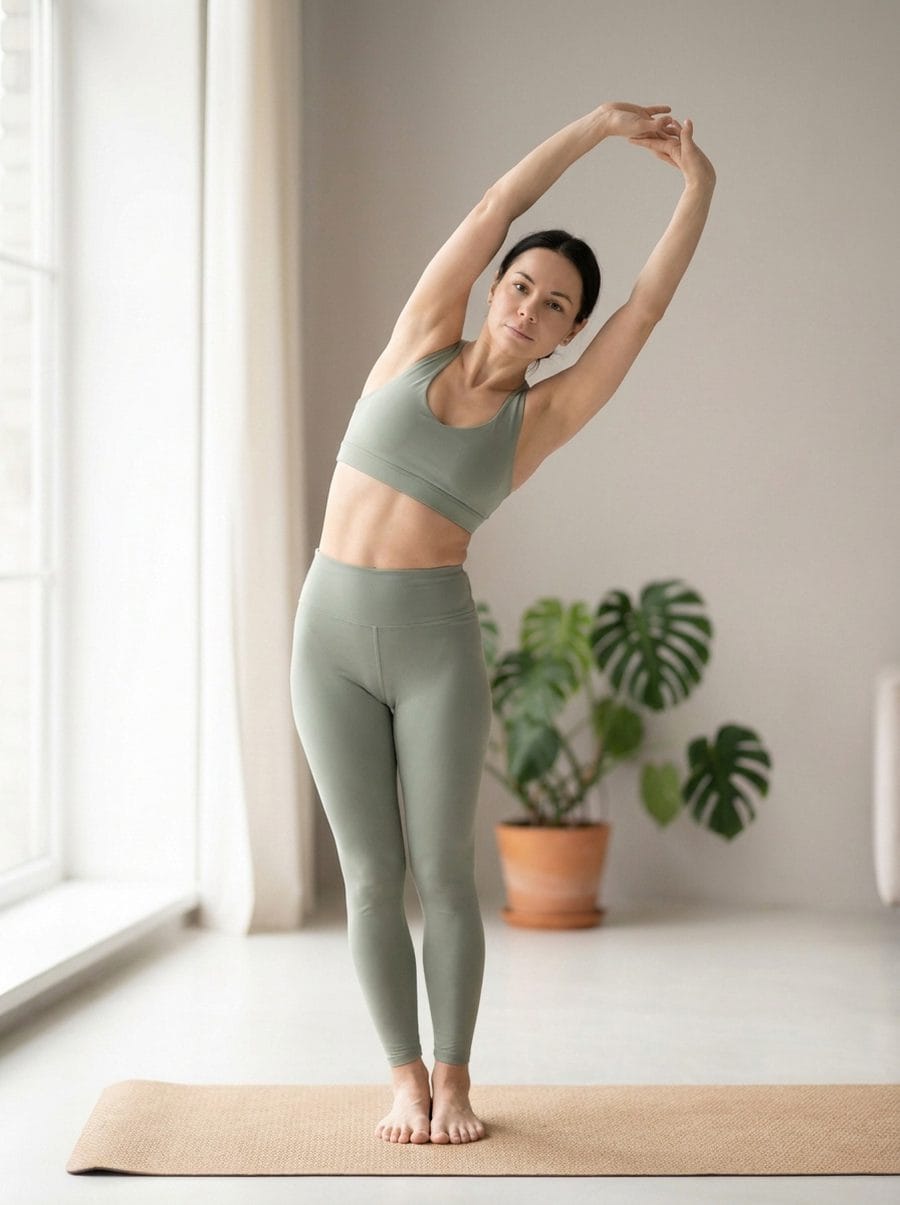
As you inhale, sweep your straight arms out and up; as you exhale, float them down. That's the Upward Salute Flow. Then lace your fingers overhead and lean directly to one side while your hips stay heavy on the seat.
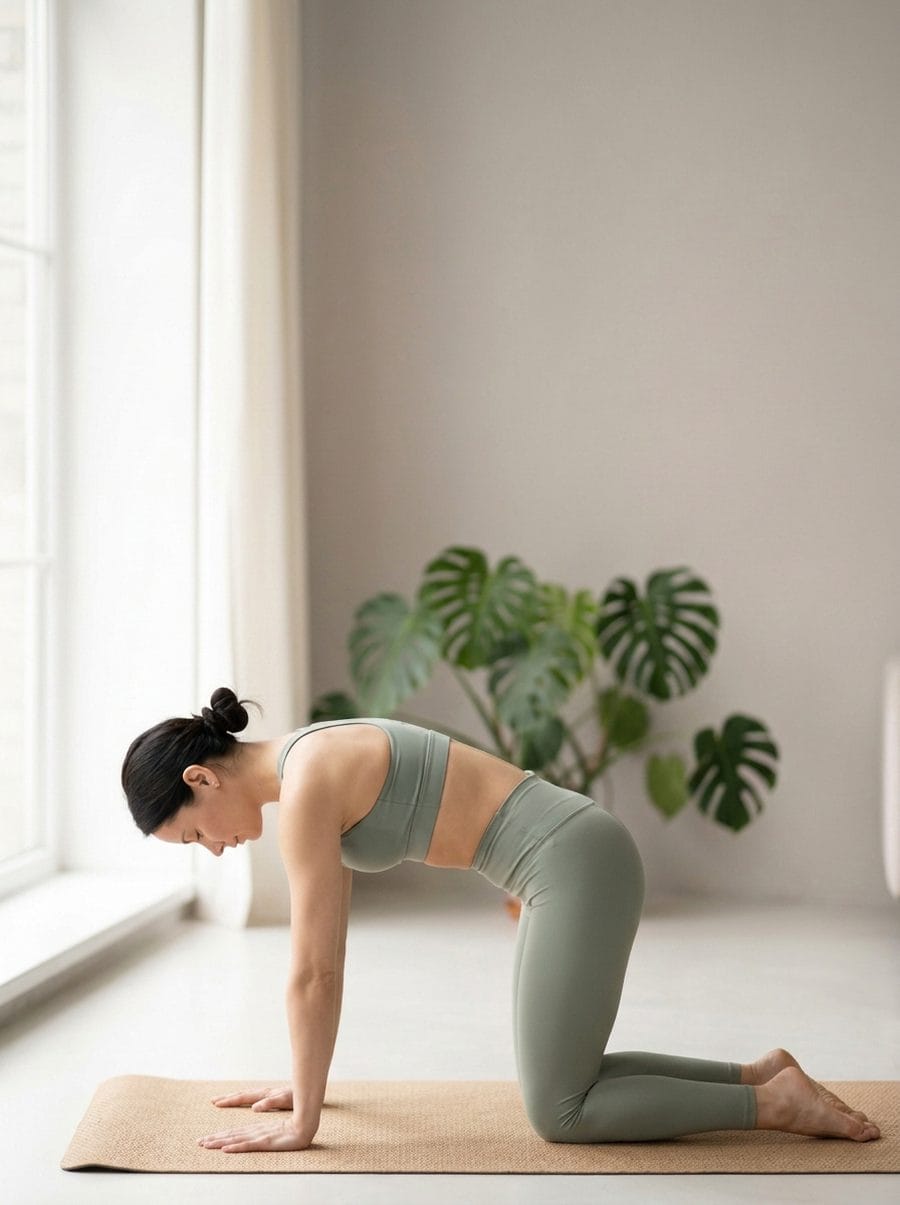
For Cat-Cow in a chair, rest your palms on your knees: inhale and lift your chest forward and up, exhale and round your back as your chin drops toward your chest.
Eagle arms and Cow Face arms
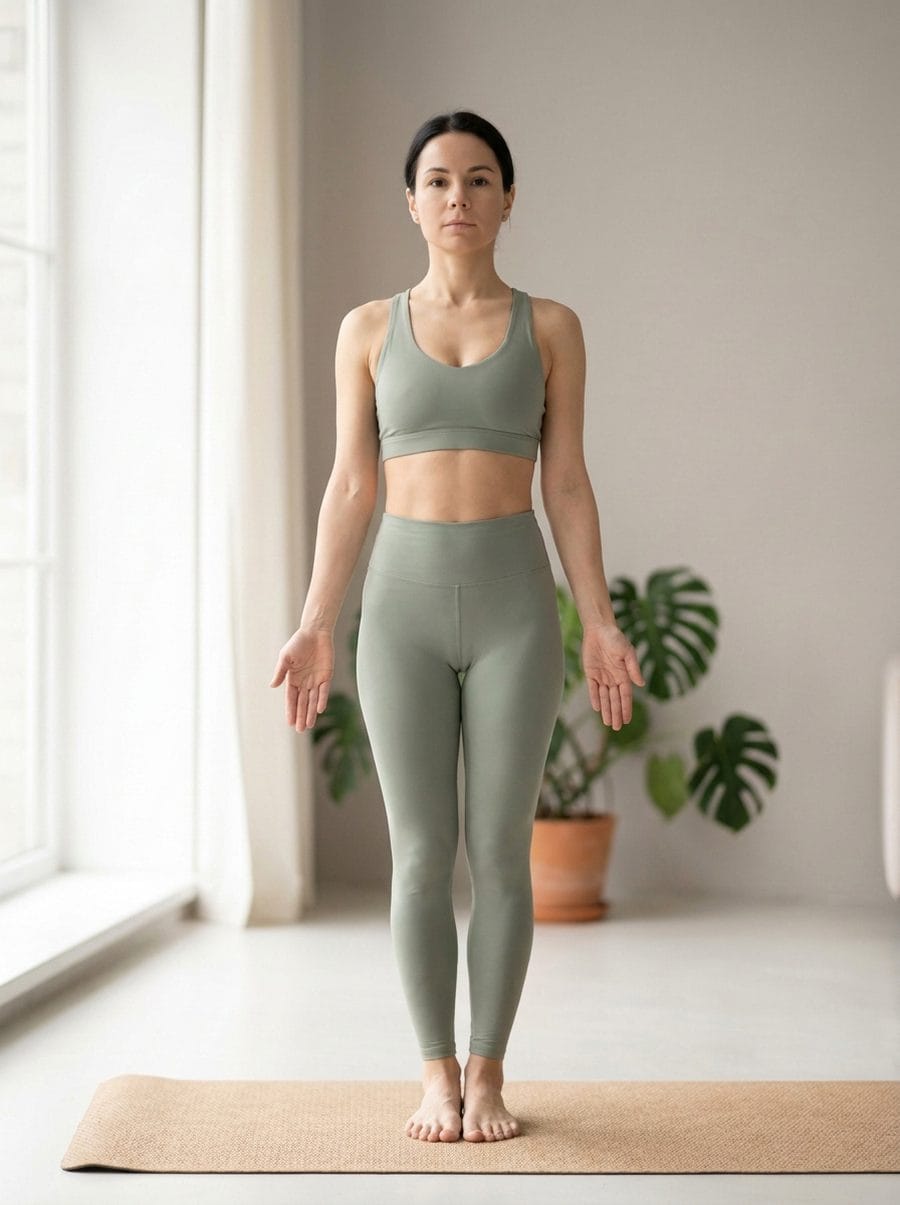
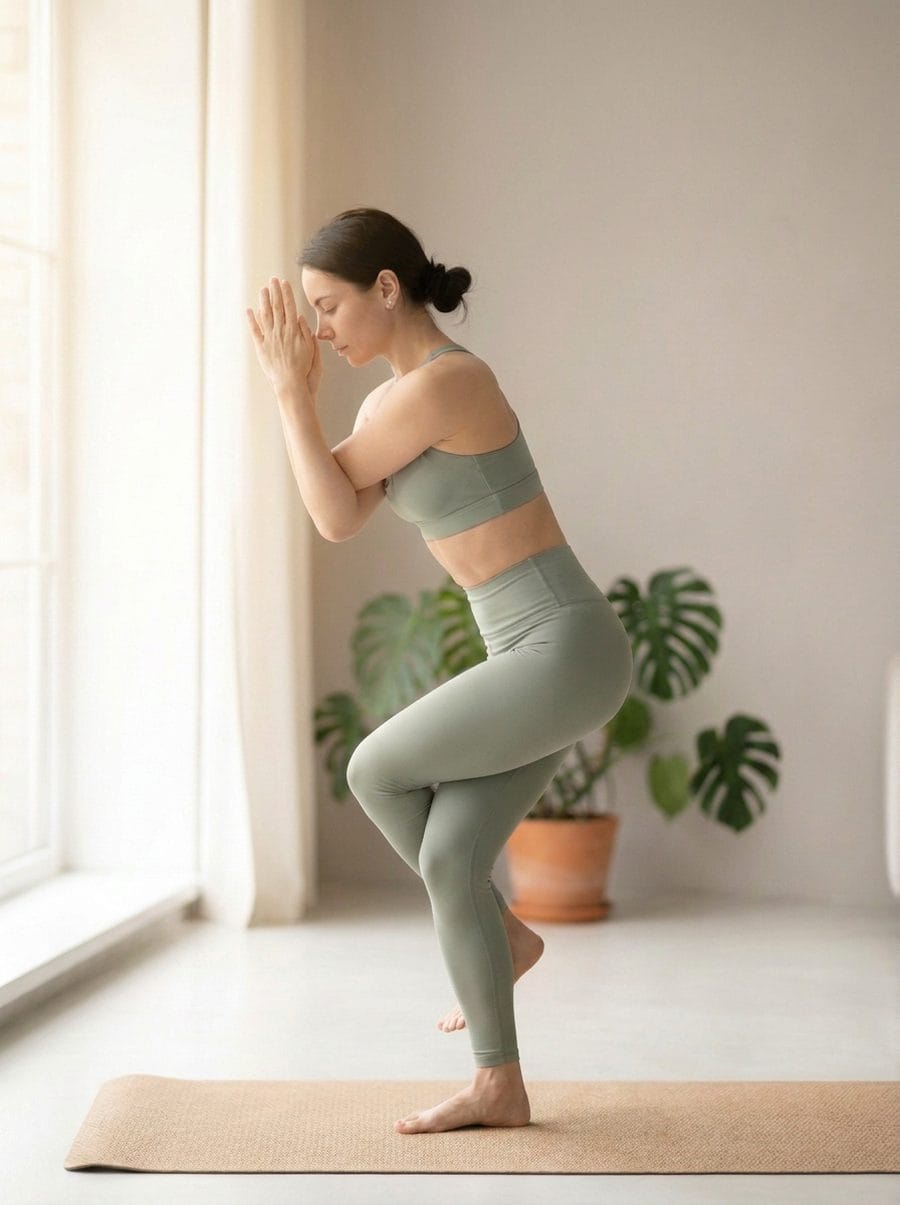
From Eagle Pose and Cow Face Pose, we borrow just the arms. For Eagle, cross your arms in front of your chest, one elbow under the other, and lift your elbows to shoulder height to stretch across your upper back.
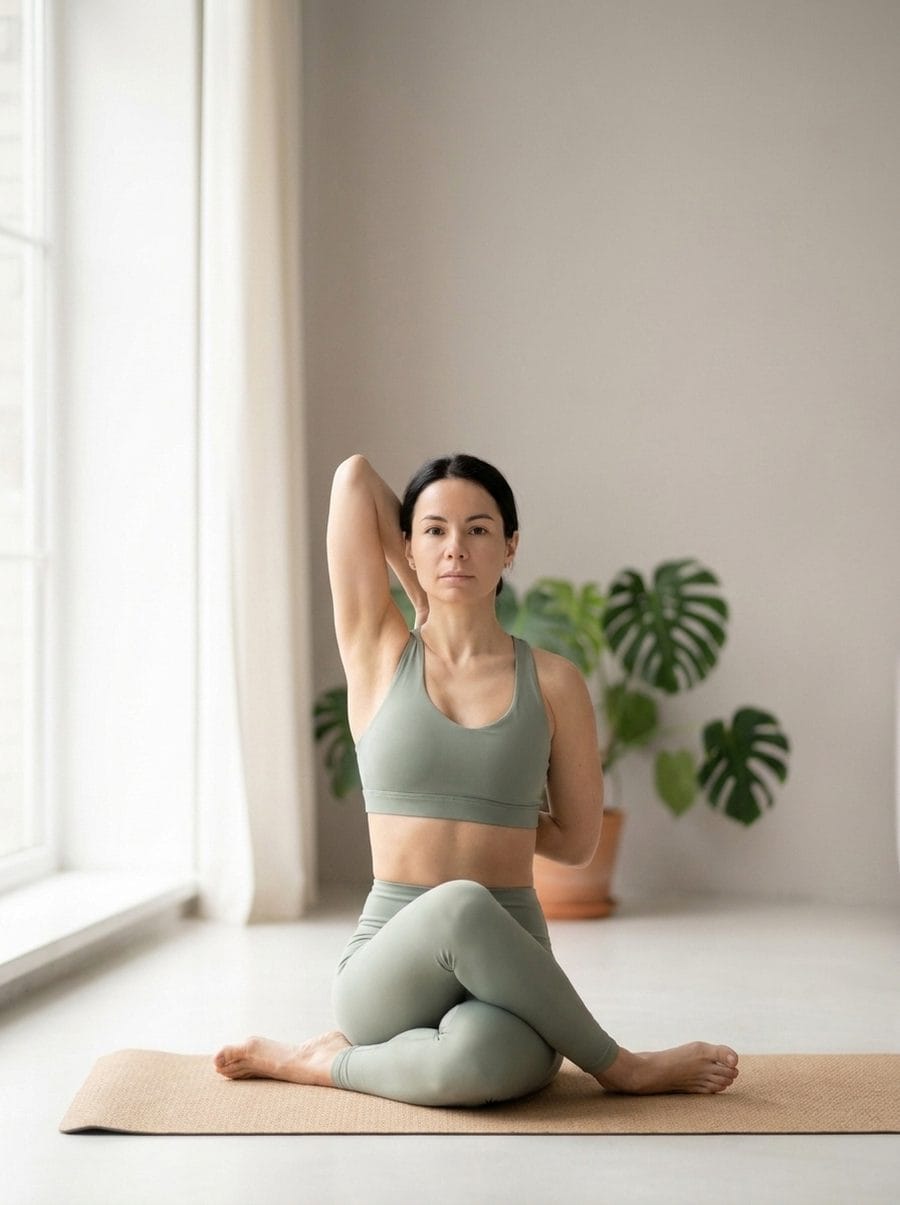
For Cow Face, one arm reaches behind your back from below and the other from above. If your fingers don't meet, hold a strap or a towel.
Twist and forward fold
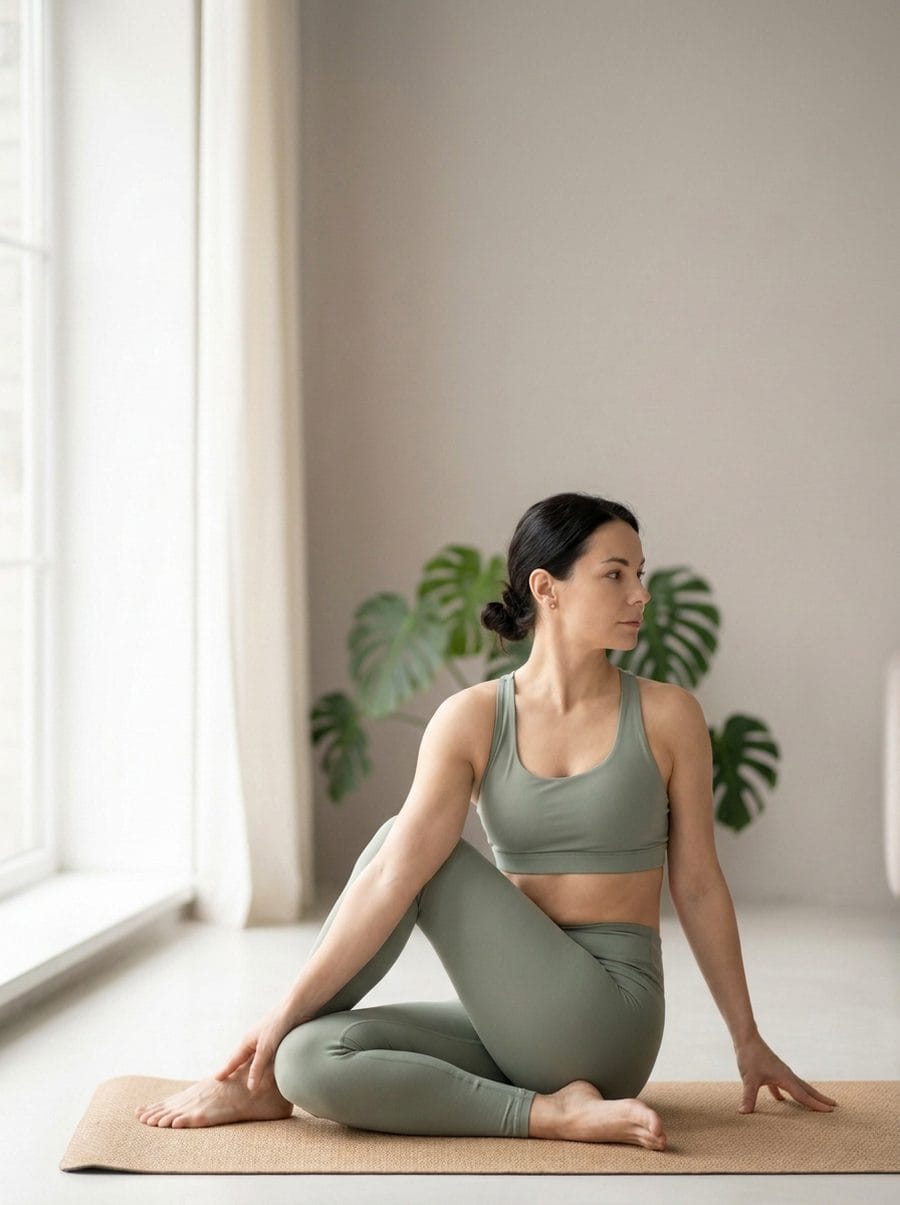
For a seated twist in a chair, keep your feet planted and knees facing forward. On an exhale, turn your torso to one side with one hand on your knee and the other on the backrest or seat behind you.
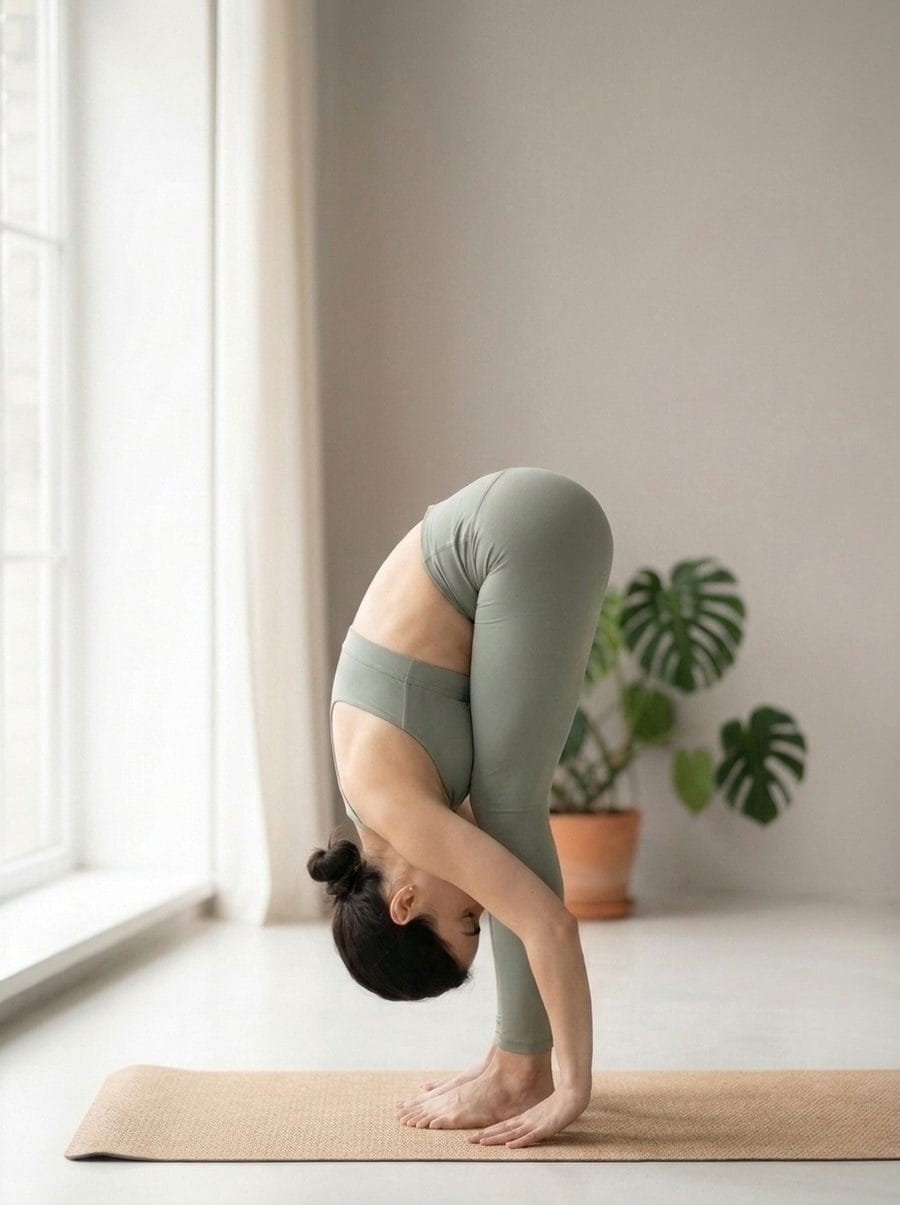
The rotation travels from your lower belly up to your chest, and your head turns last. For the forward fold, a seated take on the Standing Forward Fold, perch near the edge of the seat and let your torso drape over your thighs, arms hanging toward the floor. Roll back up slowly, one vertebra at a time.
Standing poses with a chair for support
A chair is a great helper on your feet, too. Set it with its back toward you against a wall so it can't slide.
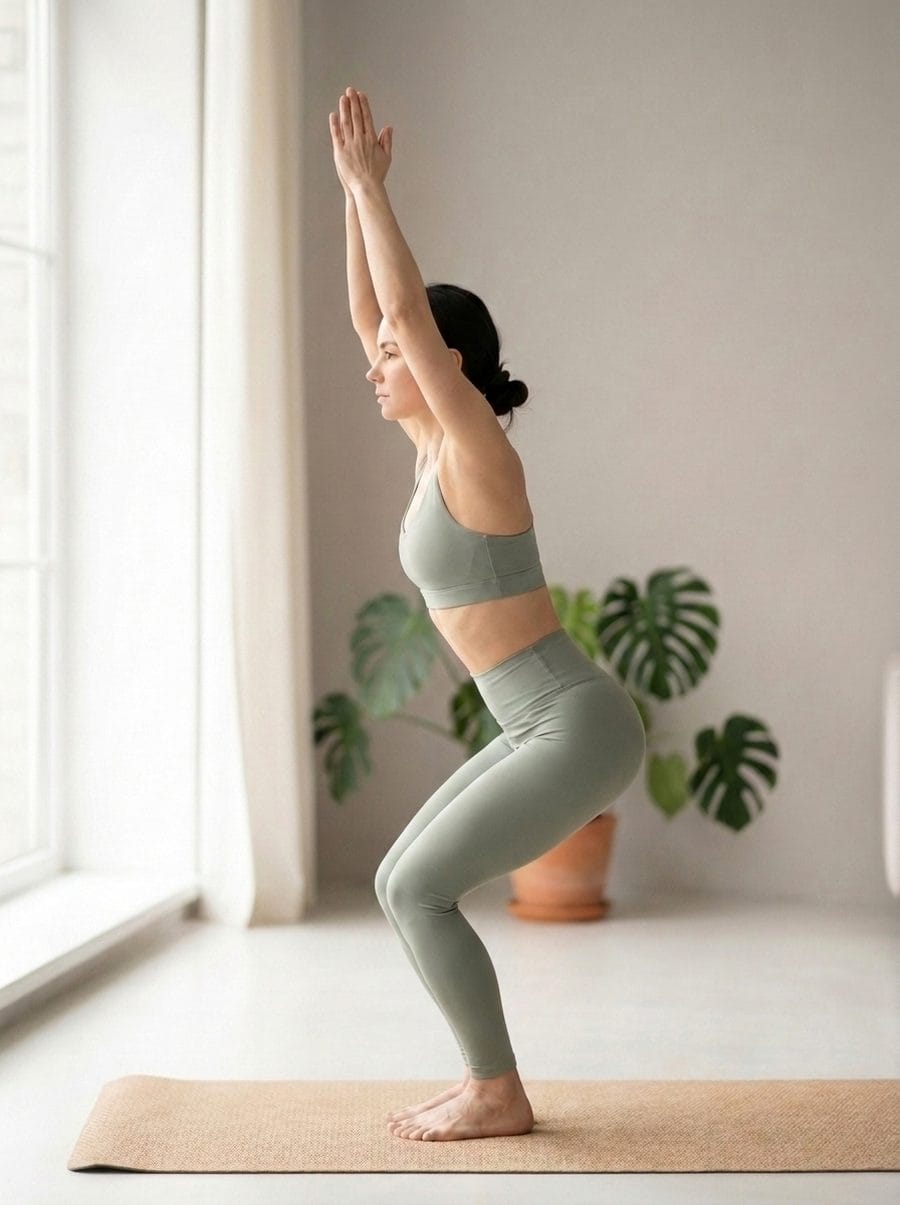
- Chair Flow. Stand in front of the seat and slowly lower yourself until you barely touch it, then rise on an inhale. Your weight stays back over your heels, and your knees never pass your toes. This turns Chair Pose into a safe leg exercise.
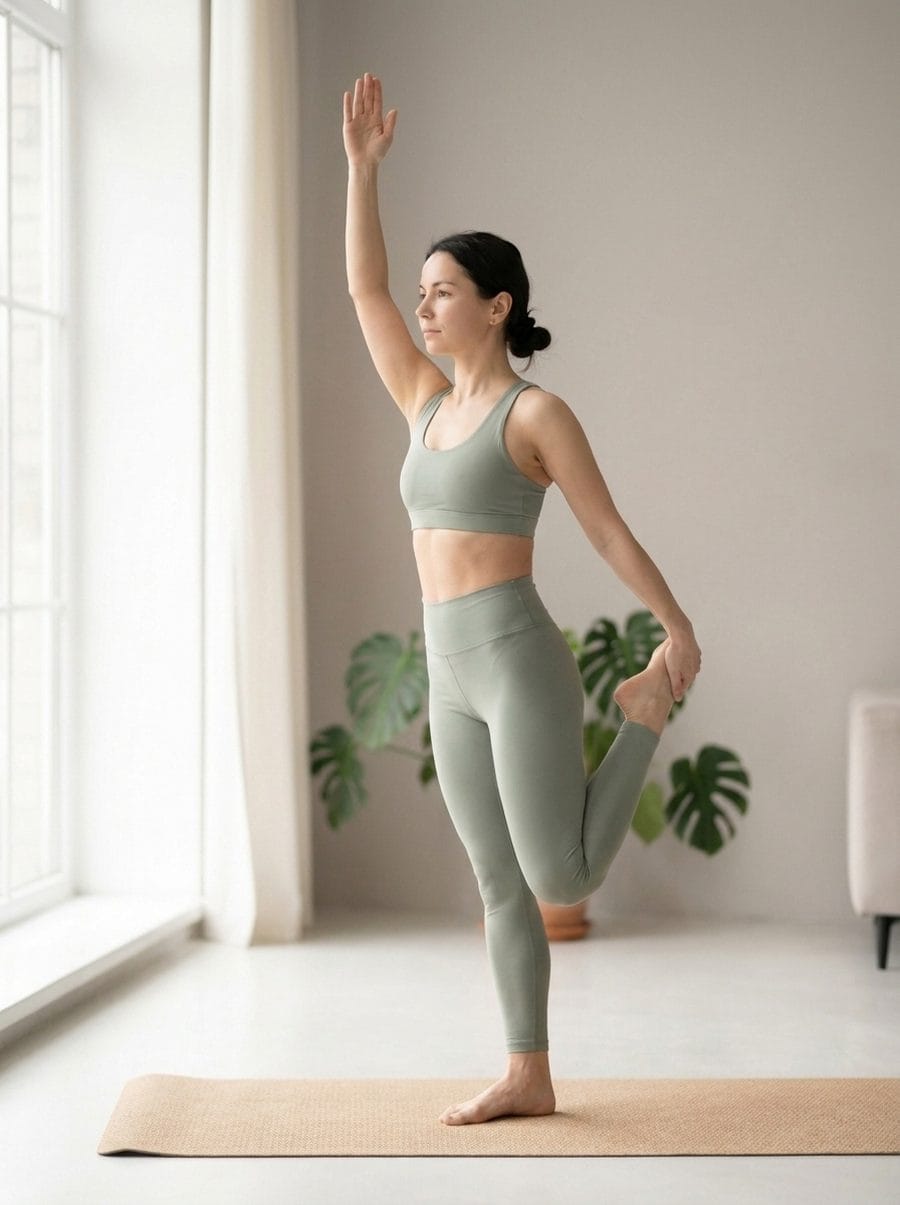
- Half Tree Pose. Hold the backrest with one hand, move your weight to one foot and press the sole of your other foot against your shin below the knee. Your toes can stay on the floor.
A 10 to 12 minute chair yoga sequence
1. Two minutes for the neck, shoulders and wrists. 2. Upward Salute Flow and side bends: about a minute. 3. Seated Cat-Cow: 6 to 8 slow rounds. 4. Eagle arms and Cow Face arms: 30 seconds per side for each. 5.
A twist to each side, then the fold over your thighs. 6. Chair Flow: 5 to 8 slow sit-downs toward the seat. 7. Half Tree at the back of the chair: 20 to 30 seconds per leg. 8. Seated finish: close your eyes and spend a minute or two with the Full Yogic Breath.
In the app, the closest match is Office Reset, a 10-minute routine. Its first three exercises (Neck Warm-Up, Shoulder Rolls and Wrist Warm-Up) can be done sitting in a chair. After that, the program moves on to Eagle Pose standing, Cow Face Pose and poses on the mat, so the full routine suits people who can get down to the floor.
If you go through the full program, leave out Fish Pose if your neck is injured or you're prone to migraines or hypertension, and Puppy Pose with injured shoulders.
Chair yoga for seniors
After 60, a chair is especially useful: it steadies you in balance work and lets you practice without getting down on the floor. A few rules help:
- move more slowly than you think you need to, especially when bending and coming back up;
- keep water nearby and pause whenever you're short of breath;
- stand up from the chair in two steps: first slide to the edge, then rise with your hands on your thighs;
- practice at least twice a week, as the NHS suggests.
For more on a gentle practice, see Yoga for Seniors. For your workday, read Desk Yoga.
Safety
If you haven't exercised in a while or live with a chronic condition, talk to your doctor first. Wait on the Neck Warm-Up until any sharp neck pain or dizziness is gone. Skip the side bends in a bout of acute low back pain, and Cat-Cow whenever your back hurts sharply.
Avoid the twist with a spinal disc herniation, during pregnancy or in a flare-up of digestive disorders. High blood pressure rules out the forward fold. Chair Flow is off the list with knee injuries, and also during a flare-up of trouble in your lower back.
Our seated Eagle uses only the arms, which also respects that pose's knee caution; with a balance disorder, do Half Tree next to a wall. Stop if you feel pain, shortness of breath or dizziness. More in Safety and Contraindications.
Pose cautions in this article
- Acute neck pain (Neck Warm-Up)
- Dizziness (Neck Warm-Up)
- Acute wrist injuries (Wrist Warm-Up)
- Acute lower back pain (Mountain Pose with Side Bend)
- Acute back pain (Cat-Cow)
- Wrist injuries — practice on your fists (Cat-Cow)
- Knee injuries — don't hook your foot behind your shin (Eagle Pose)
- Shoulder injuries — use a strap (Cow Face Pose)
- Knee injuries — sit on a prop (Cow Face Pose)
- Spinal disc herniation (Seated Twist)
- Pregnancy (Seated Twist)
- Flare-ups of digestive disorders (Seated Twist)
- High blood pressure (Standing Forward Fold)
- Lumbar disc herniation — bend your knees (Standing Forward Fold)
- Knee injuries (Chair Flow)
- Flare-up of lower back problems (Chair Flow)
- Balance disorders — stand near a wall (Half Tree Pose)
This site is for general information and is not medical advice. If you have pain, an injury, a chronic condition, or are pregnant, check with a qualified professional before practicing.
Questions
Is chair yoga real yoga or just stretching? It's yoga: the same poses, the same attention to your breath and alignment. Only the support changes, which opens the practice to people who can't use a mat right now.
Can I do chair yoga in an office chair with wheels? For seated exercises, a regular sturdy chair is better. A rolling chair can slide away from you, especially during twists and when you stand up.
How many minutes a day of chair yoga do I need? Ten to 12 minutes is enough. At the office, it's easy to split the routine into two or three short breaks during the day.
Is chair yoga good for seniors? Yes. For older adults, few formats are easier to start with. Start with the warm-up and the seated exercises, and add the standing poses once you feel more confident.
Sources
- NHS. Sitting exercises. National Health Service, UK.
- Pose technique and cautions, and the contents of the routine: the Hatha Yoga app. More about how we check our texts on the How We Prepare Our Content page.
Read next
- Yoga for Arthritis and Osteoporosis: How to Protect Your Joints and Bones7 min read
- Ashtanga Yoga Explained: The Series, the Breath and the Difference from Hatha6 min read
- Ayurveda Explained Simply: The Basics and a Daily Routine (Dinacharya)5 min read
- Balance Exercises: 10 Yoga Poses for Balance and Stability7 min read