 Hatha Yoga
Desk Stretches and Office Yoga: Seated and Standing Exercises for Your Workday
Hatha Yoga editorial team · Updated · 7 min read
Eight hours at a computer wear you out just as much as a day on your feet, only differently: your neck and shoulders turn to stone, your lower back aches, and your wrists get tired from the keyboard. Desk stretches and a bit of office yoga fix the routine without a gym or a change of clothes.
Below you'll find a schedule of short breaks for your day, 10 seated and standing exercises at your desk, a 10-minute lunch-break routine, and evening programs for your wrists and lower back.
Why desk work is so tiring
Muscles get tired not only from moving but also from not moving. When you hold one position for hours, some muscles work nonstop while others switch off. Blood flows more slowly to your legs, your breathing turns shallow, and your focus fades.
The World Health Organization defines sedentary behavior as any waking time spent with low energy output, whether sitting, reclining or lying down. Its guidance boils down to two simple ideas: any activity beats none, and people of every age should limit their sitting time.
For office workers, that means getting up often matters more than one good workout in the evening.
Your workday plan: micro-breaks, lunch, evening
- Every 30 to 60 minutes: a 1 to 2 minute break. Stand up, reach overhead, do a couple of side bends or a seated neck warm-up. Set a reminder, or work will swallow the break.
- Midday: 10 minutes. The Office Reset routine in a meeting room, or at home if you work remotely.
- Evening: 12 to 15 minutes. A program for your wrists or your lower back, whichever feels more worn out.
This rhythm is easier than it sounds. Two minutes fit between calls, and your body gets movement all day long. Here's a sample two-minute break:
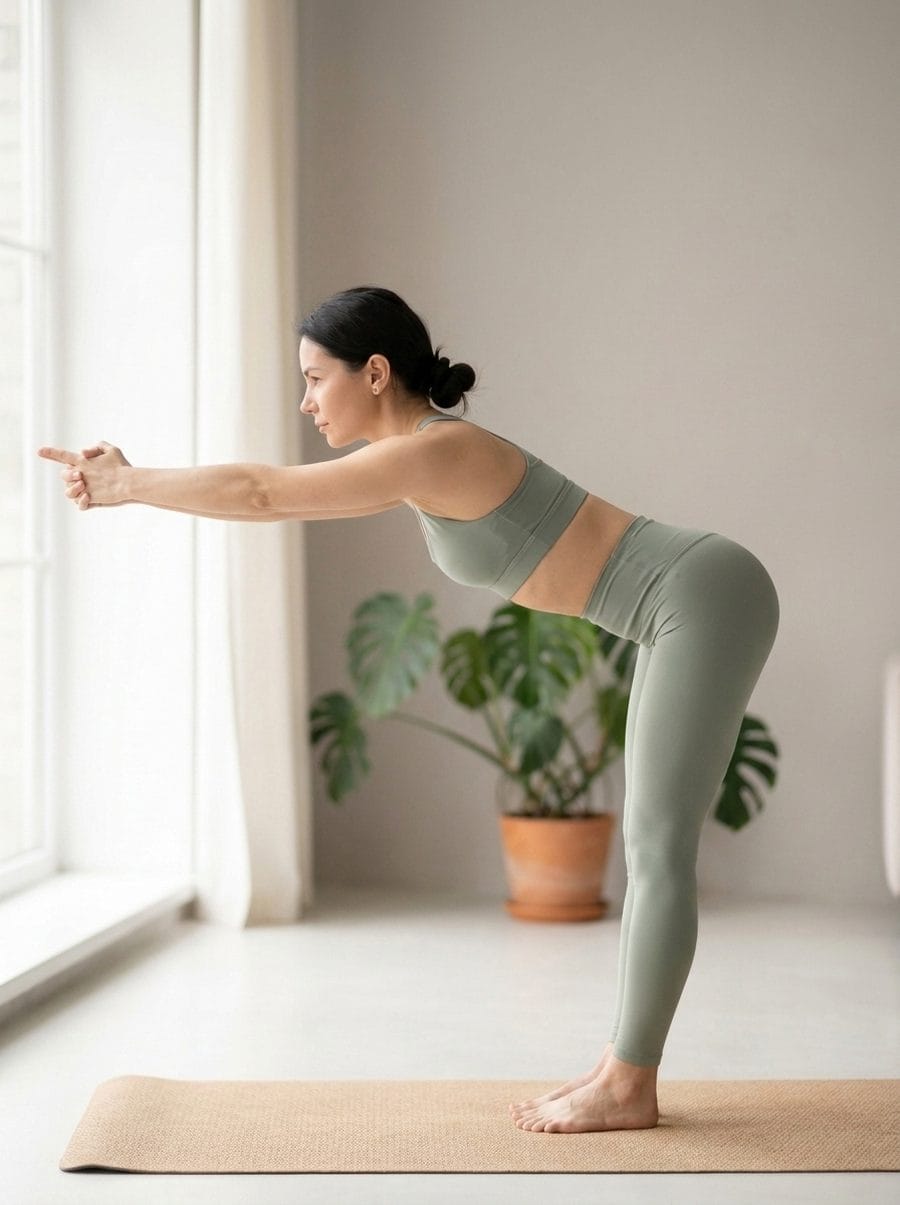
1. Stand up and do three rounds of the Upward Salute Flow. 2. Lean to each side twice. 3. Hold a Half Forward Fold at your desk for five breaths. 4. Sit down and roll your shoulders back five times.
Desk stretches: seated and standing
The seated moves can be done without leaving your desk or drawing your coworkers' attention.
Seated: neck, shoulders, wrists and arms behind your back
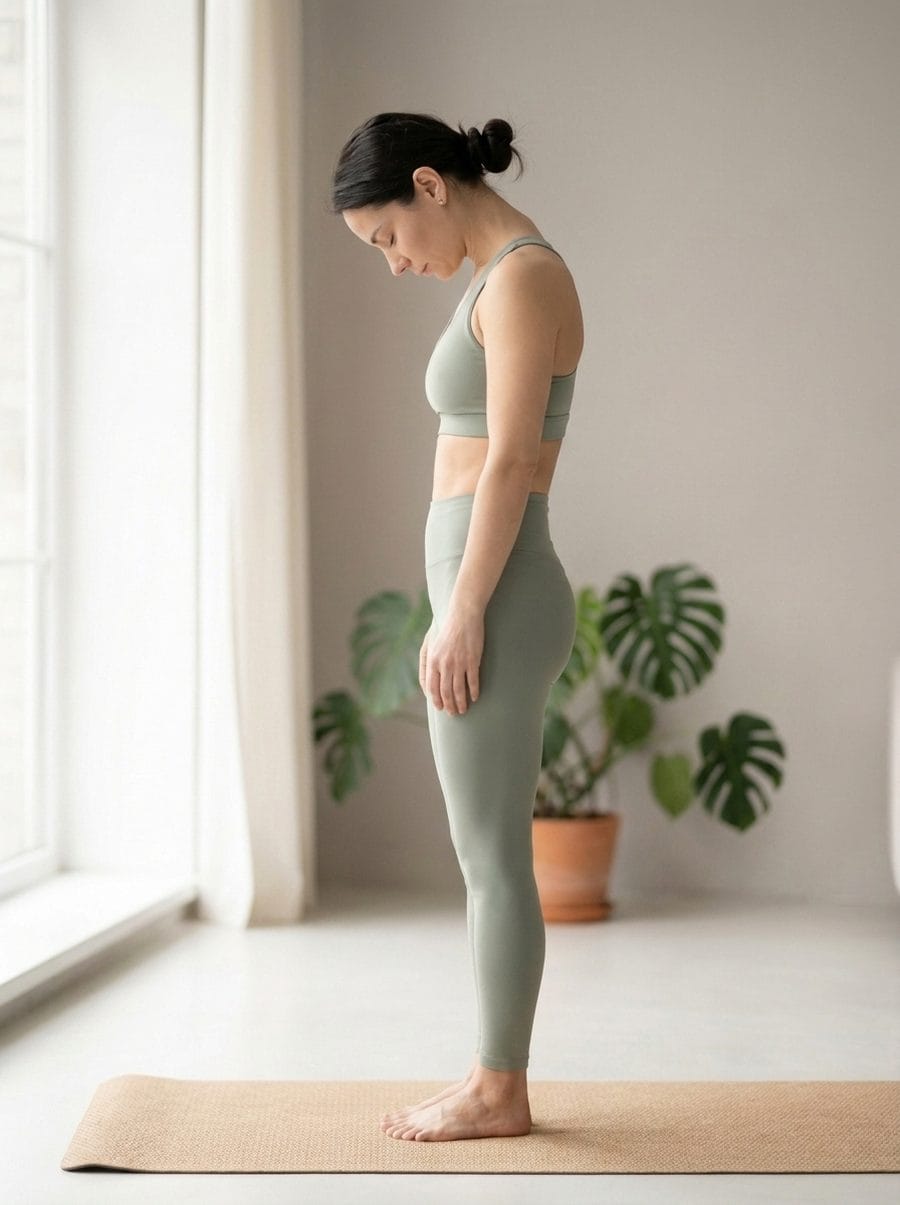
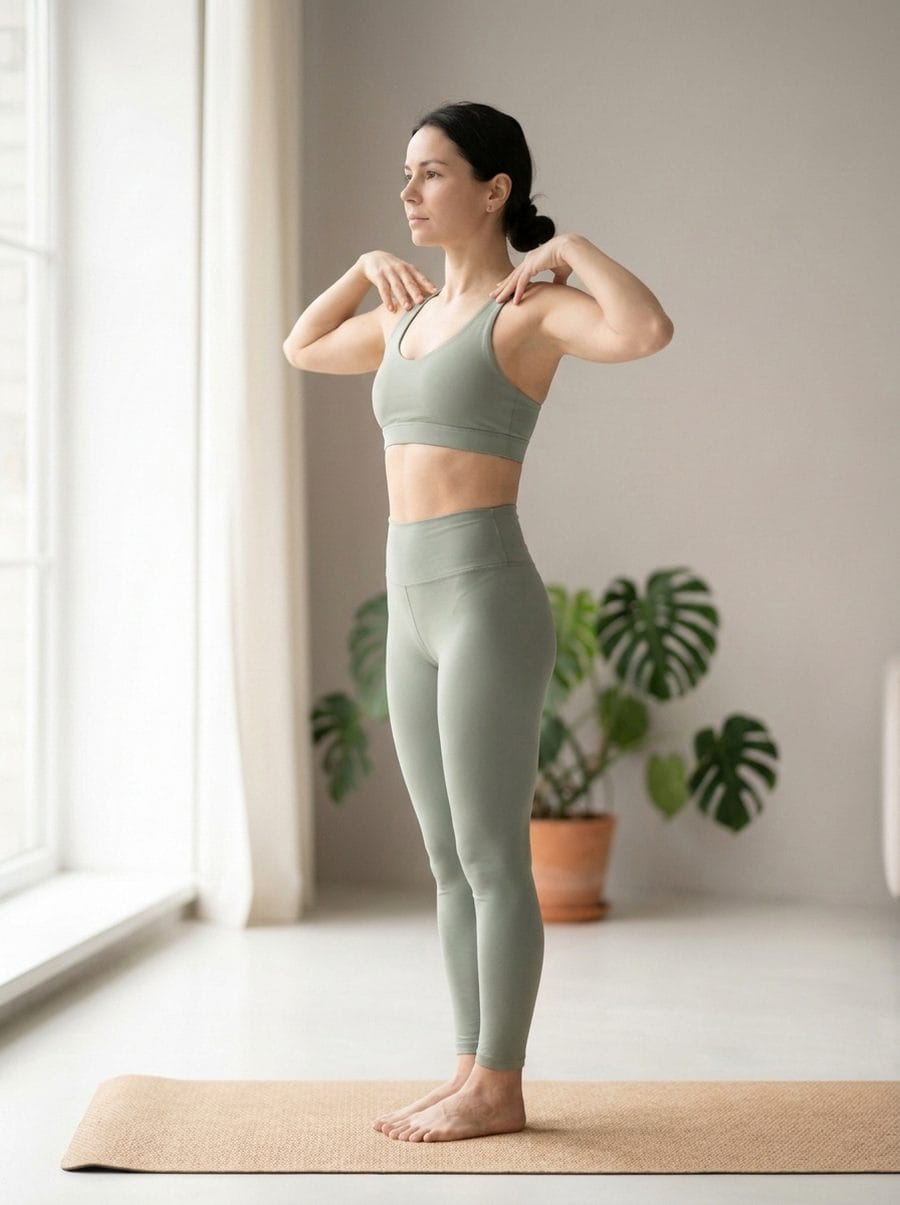
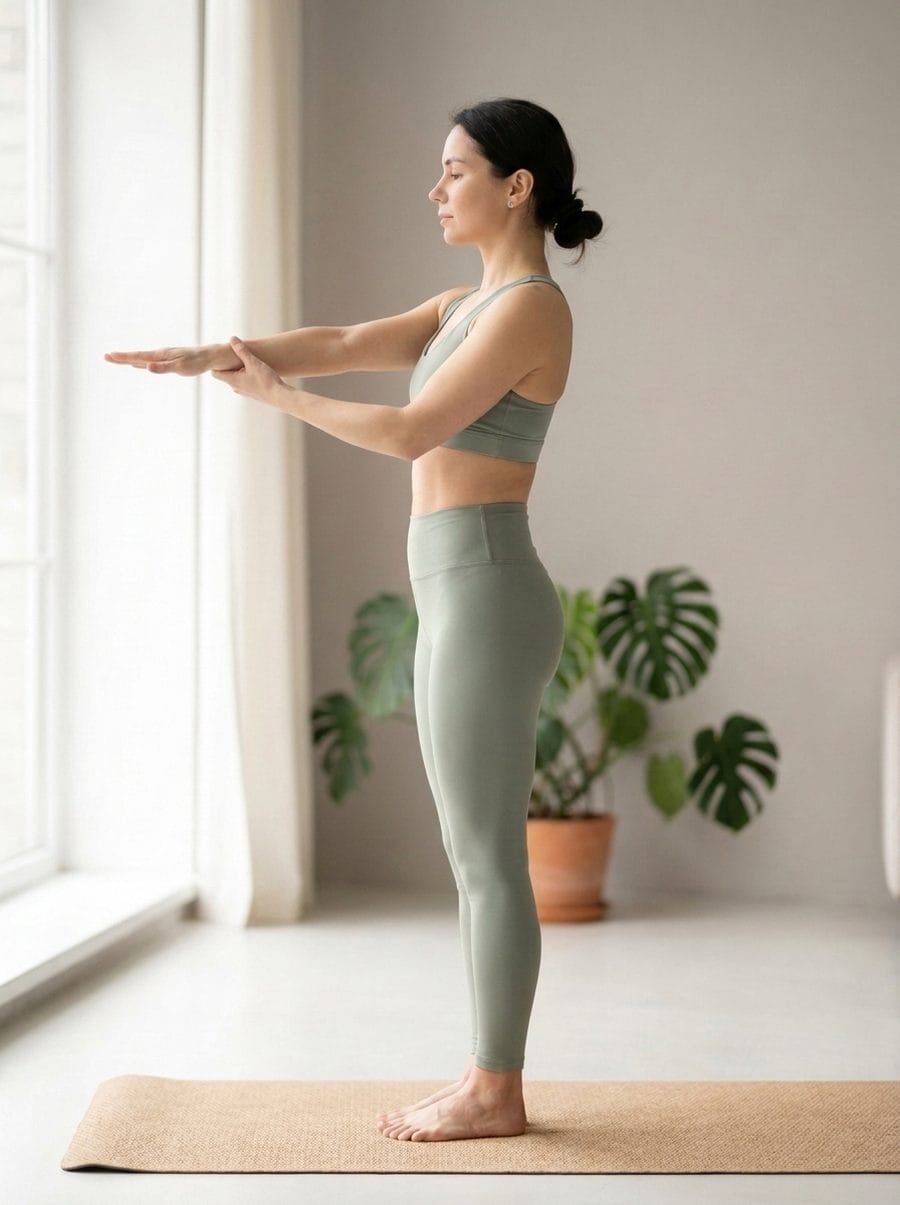
For the Neck Warm-Up, let your head roll in a slow half circle, chin gliding near your chest as it travels across, and don't tip it back. Shoulder Rolls backward open the chest that caves in over the keyboard. For your wrists, make fists, circle them, then gently pull your fingers back toward you.
The arm position from Cow Face Pose, one hand reaching down your back from above and the other from below, gives your shoulder joints room to move. Fingers that can't reach each other? Bridge the gap with a bag strap or a towel.
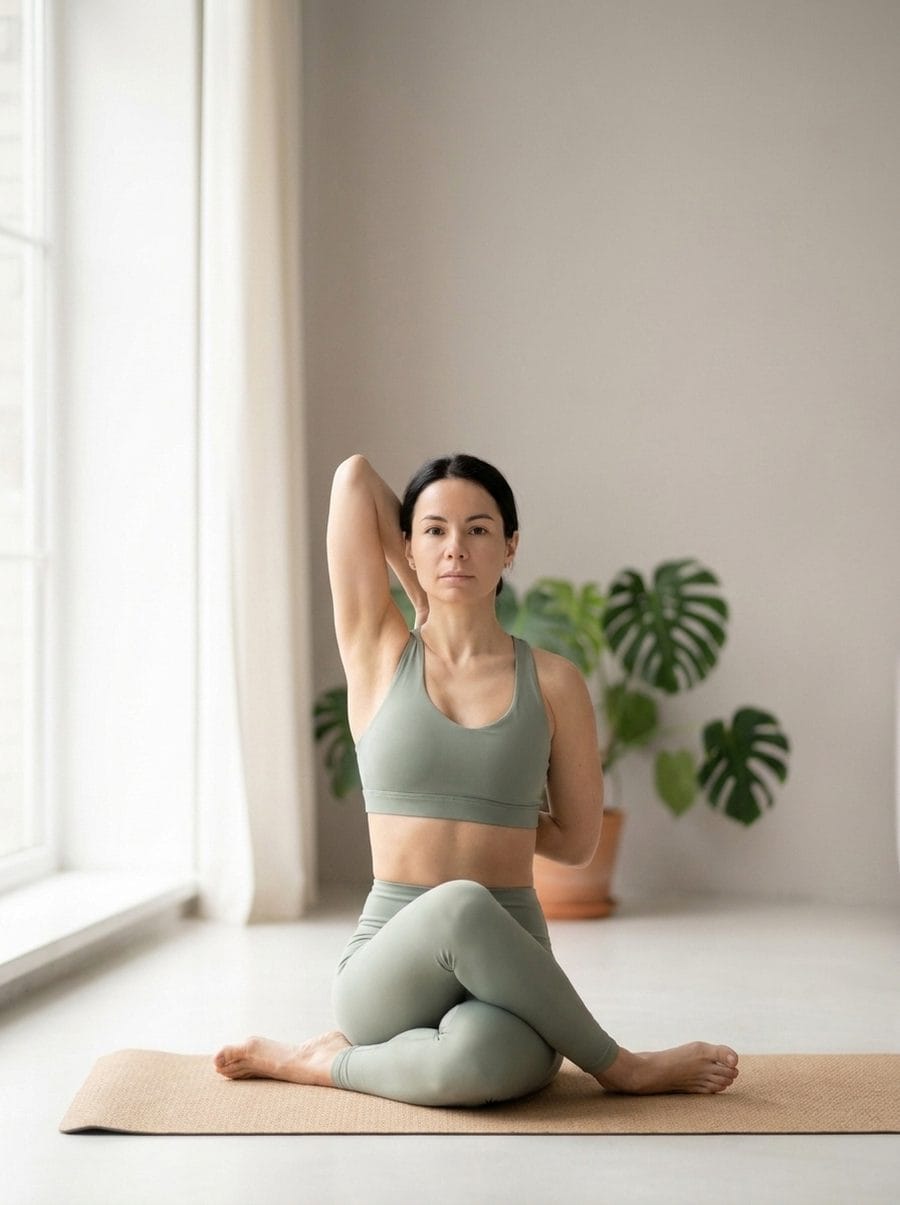
You'll find more seated moves, including a twist and a forward fold, in Chair Yoga.
Standing up does more than stretching in your chair: your legs switch on and your breathing deepens. If you have a standing desk, keep changing positions anyway, since standing still for a long time is tiring too.
Standing: stand tall and reach
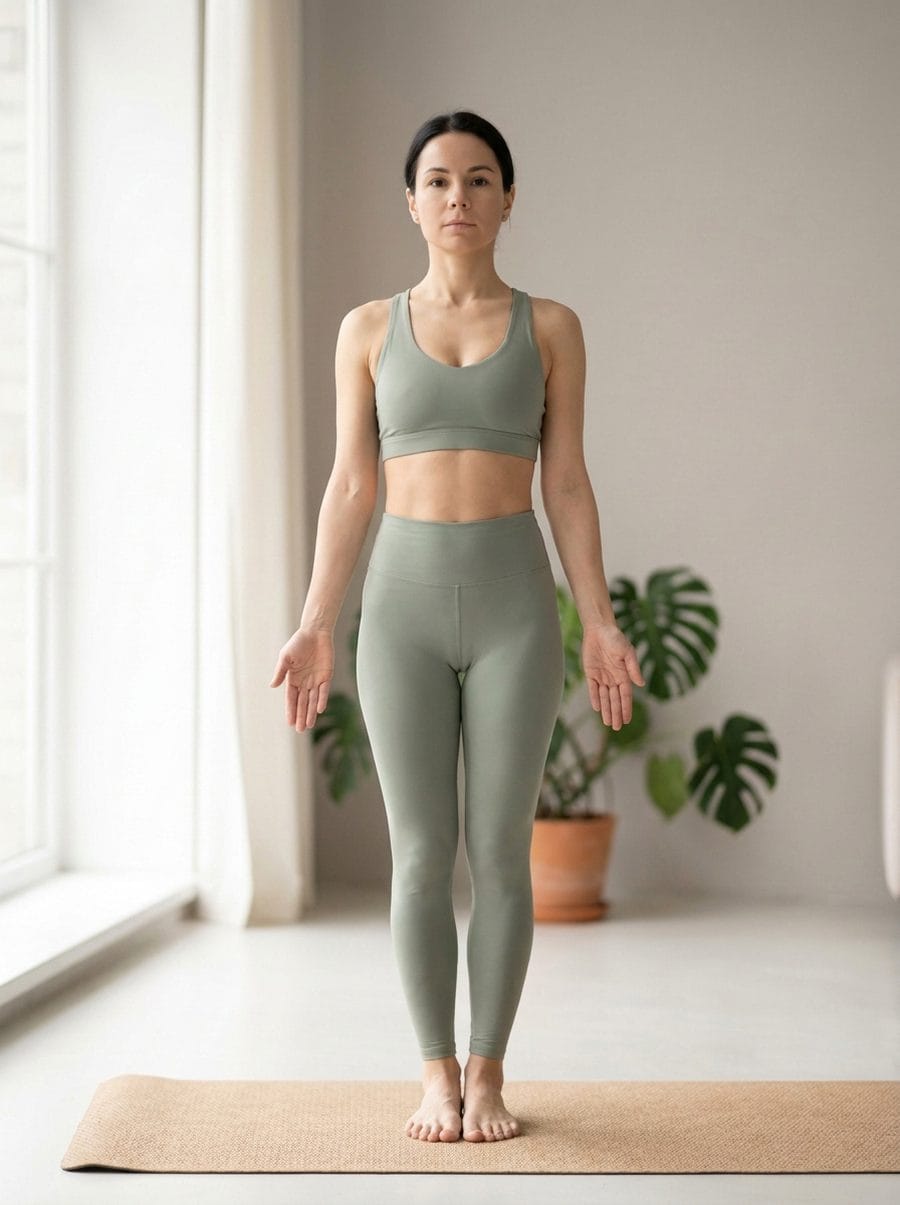
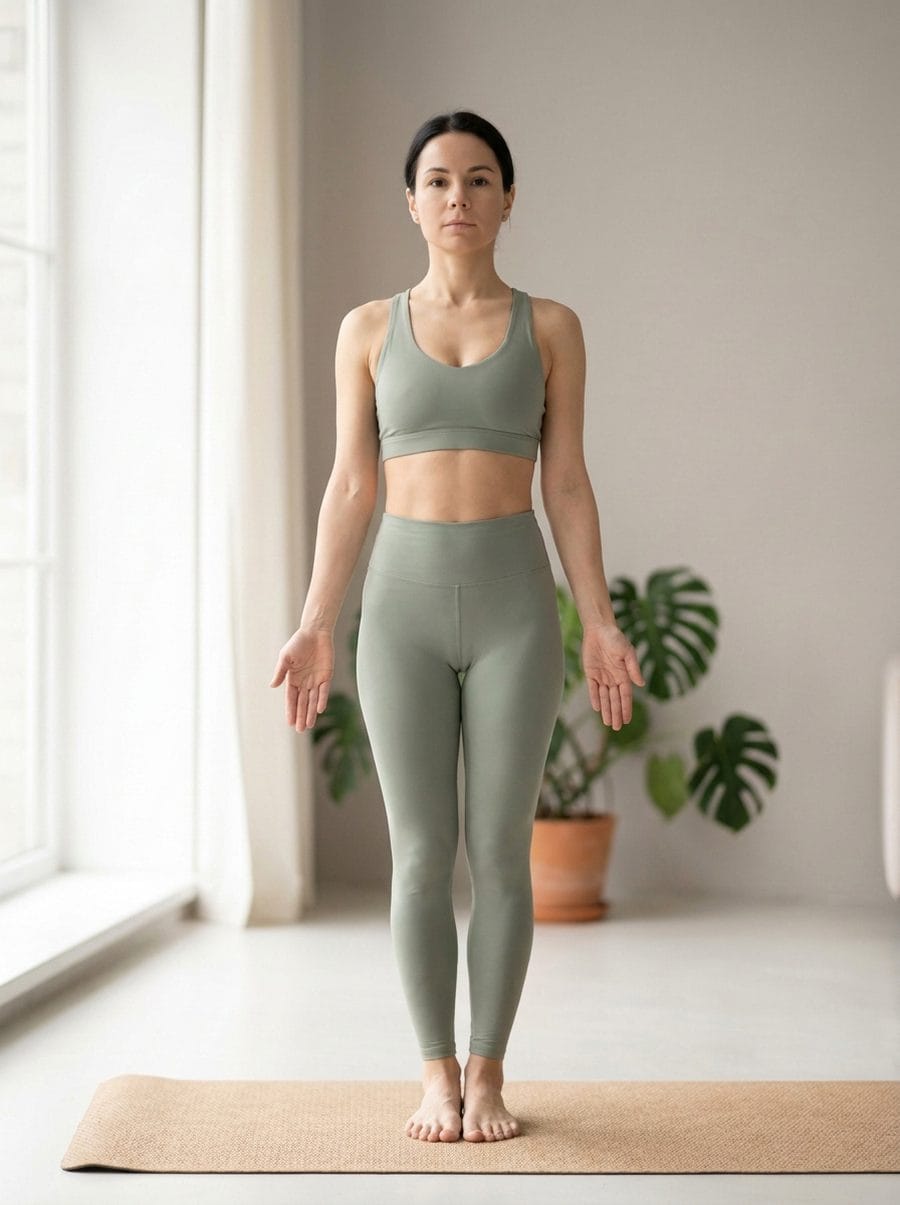
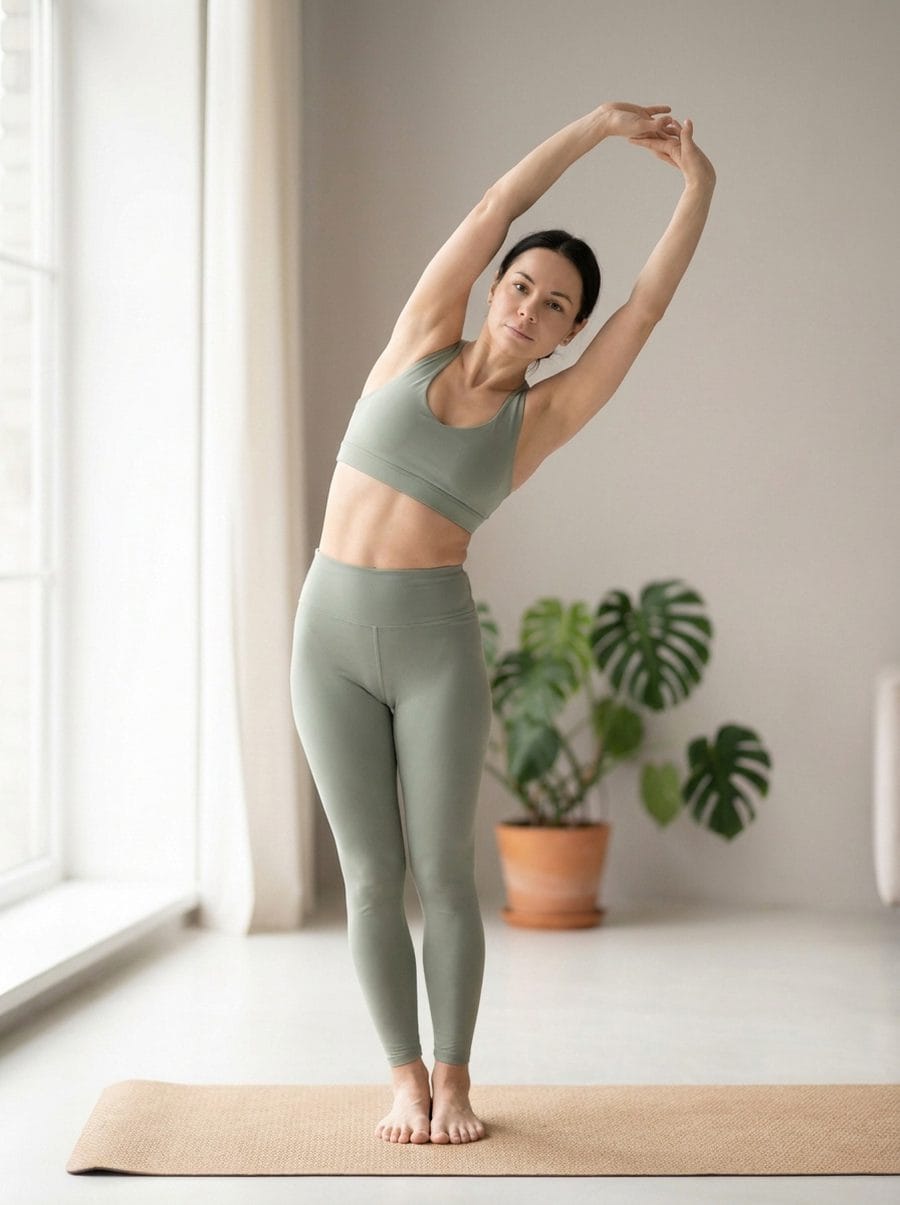
Come into Mountain Pose: feet hip-width apart, weight on both legs, crown of the head lifting. From there, sweep your arms out and up with each inhale and bring them down with each exhale, 5 or 6 times. Then clasp your hands above your head and bend sideways, keeping the pelvis still.
Standing: lengthen your back at the desk
Half Forward Fold is easy to do with your hands on the edge of the desk. Place your palms on the desktop, walk your feet back until your back is parallel to the floor, and stretch your head and hips in opposite directions.
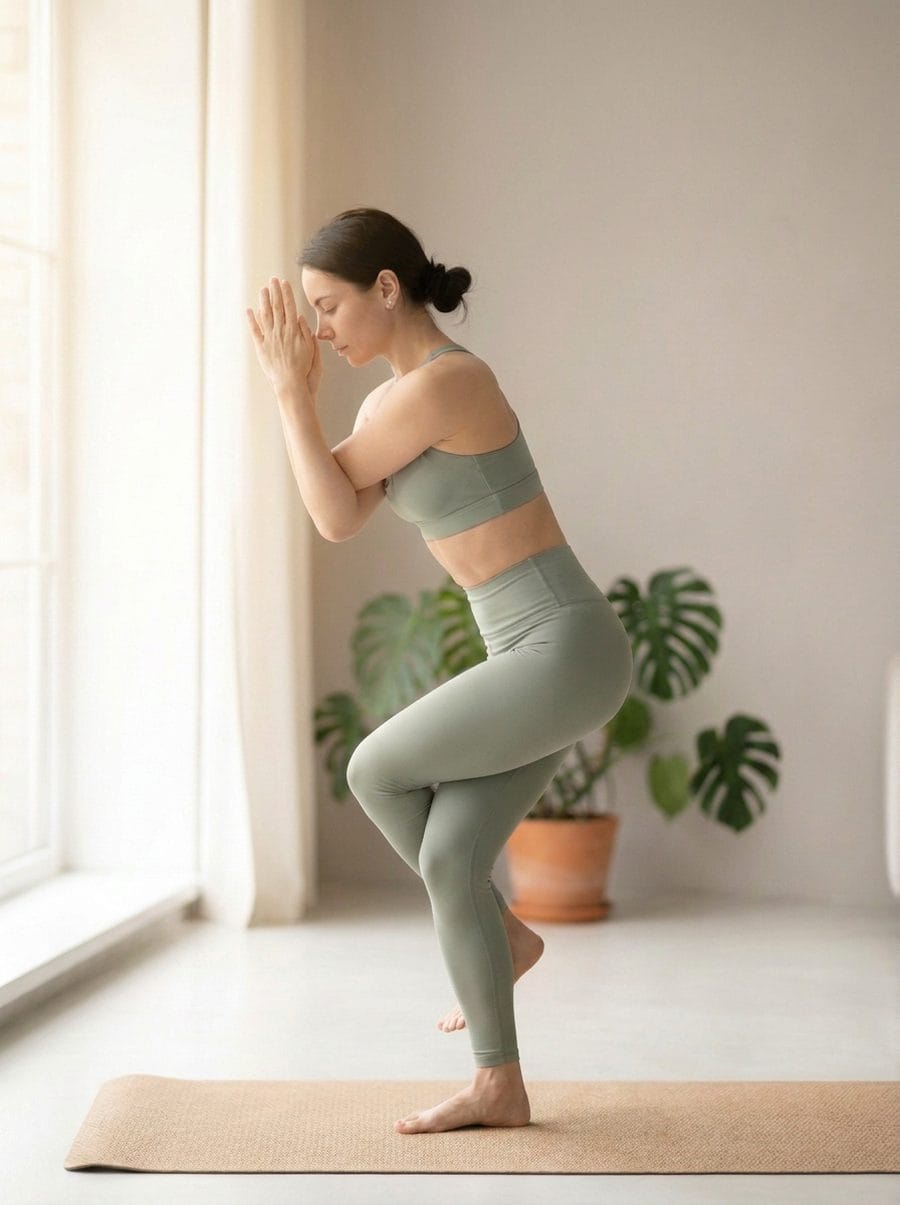
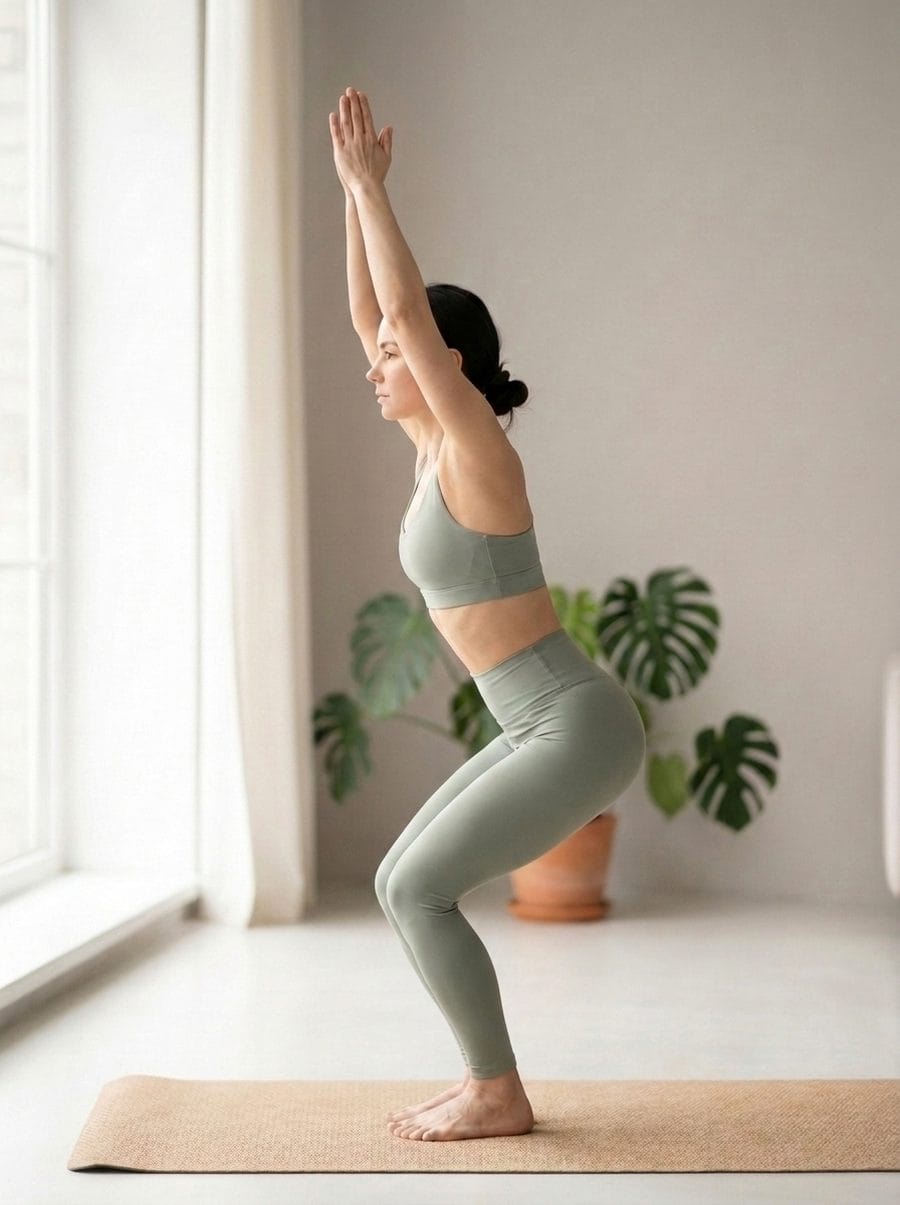
Soften your knees if your hamstrings complain. Eagle Pose, done standing, stretches across the upper back and trains your balance at the same time. Chair Pose fires up your legs and warms your whole body in thirty seconds.
Office Reset: a 10-minute office yoga routine
If you have a meeting room and a mat, or you work from home, do the Office Reset routine at lunch. It's a beginner program with 11 exercises. The first part needs no mat: neck, shoulders, wrists and Eagle Pose standing.
Then you sit on the floor for Cow Face Pose, Cross-Legged Backbend, Cross-Legged Forward Fold and Revolved Thunderbolt Pose, and on the mat you move into Puppy Pose and Fish Pose. It closes with a couple of minutes resting flat on your back.
Two poses in Office Reset aren't for everyone: Fish Pose is ruled out by a neck injury, by migraines and by hypertension, and Puppy Pose by an injured shoulder.
The neck and shoulder exercises from this routine are explained step by step in Yoga for Neck and Shoulders.
Wrists and lower back after work
The Wrists After Typing routine takes 12 minutes and suits anyone whose hands and forearms buzz by evening. It's an intermediate program: the Wrist Warm-Up comes up twice, at the start and near the end, with poses on all fours and seated, Snake Pose and Puppy Pose in between, and it wraps up with Cow Face Pose and Relaxation Pose.
The irony is that wrist or shoulder injuries make several of its poses off-limits. Snake Pose is also excluded during pregnancy and with lower back injuries.
If your lower back takes the biggest hit, choose Lower Back After Sitting, a 15-minute beginner program done entirely on the floor.
Here the twist and the locust are done as flows; drop both for a herniated lumbar disc or pregnancy, and Locust Flow for high blood pressure too.
Breathing when work piles up
Before a tough conversation or at the end of a hard day, try Coherent Breathing: inhale for a count of five, exhale for five, no pauses. You can do it with your eyes open right at your desk. For a deeper calm, lengthen the exhale: in the Full Yogic Breath, the inhale lasts four counts and the exhale six.
Safety
The cautions are short but strict:
- Neck. Leave the Neck Warm-Up for another day when there's acute neck pain or dizziness.
- Wrists. With an acute wrist injury, put the Wrist Warm-Up on hold.
- Lower back. Acute lower back pain rules out the side bend; when lower back problems flare, Chair Pose is off too.
- Knees. Knee injuries rule out Chair Pose. For Eagle Pose with sore knees, skip the leg wrap so your foot doesn't hook behind your shin.
- Shoulders. With a shoulder injury, link your hands with a strap in the Cow Face arm position.
If numb fingers, neck pain or lower back pain last longer than a couple of weeks, see a doctor. General rules are in Safety and Contraindications.
Pose cautions in this article
- Acute neck pain (Neck Warm-Up)
- Dizziness (Neck Warm-Up)
- Acute wrist injuries (Wrist Warm-Up)
- Shoulder injuries — use a strap (Cow Face Pose)
- Knee injuries — sit on a prop (Cow Face Pose)
- Acute lower back pain (Mountain Pose with Side Bend)
- Knee injuries — don't hook your foot behind your shin (Eagle Pose)
- Knee injuries (Chair Pose)
- Flare-up of lower back problems (Chair Pose)
This site is for general information and is not medical advice. If you have pain, an injury, a chronic condition, or are pregnant, check with a qualified professional before practicing.
Questions
How often should I do desk stretches? A 1 to 2 minute break every 30 to 60 minutes, plus one 10-minute routine around lunchtime. Doing it regularly counts for more than doing it long.
Can I do office yoga in work clothes? Yes. The seated and standing desk exercises don't require changing. For the routine with floor poses, loose pants are more comfortable.
What if I feel awkward in front of coworkers? Start with the subtle seated moves: Shoulder Rolls, the Wrist Warm-Up, the Cow Face arm position. Chances are a few coworkers will soon join you.
What helps the lower back at work? Stand up more often, and do a Half Forward Fold at your desk and some side bends. In the evening, go through the Lower Back After Sitting routine.
Sources
- World Health Organization. Physical activity. WHO fact sheet.
- Pose technique and cautions, and the contents of the routines: the Hatha Yoga app. More about how we check our texts on the How We Prepare Our Content page.
Read next
- Yoga for Arthritis and Osteoporosis: How to Protect Your Joints and Bones7 min read
- Ashtanga Yoga Explained: The Series, the Breath and the Difference from Hatha6 min read
- Ayurveda Explained Simply: The Basics and a Daily Routine (Dinacharya)5 min read
- Balance Exercises: 10 Yoga Poses for Balance and Stability7 min read