 Hatha Yoga
Hip Opening Yoga: 10 Poses for Tight Hips
Hatha Yoga editorial team · Updated · 5 min read
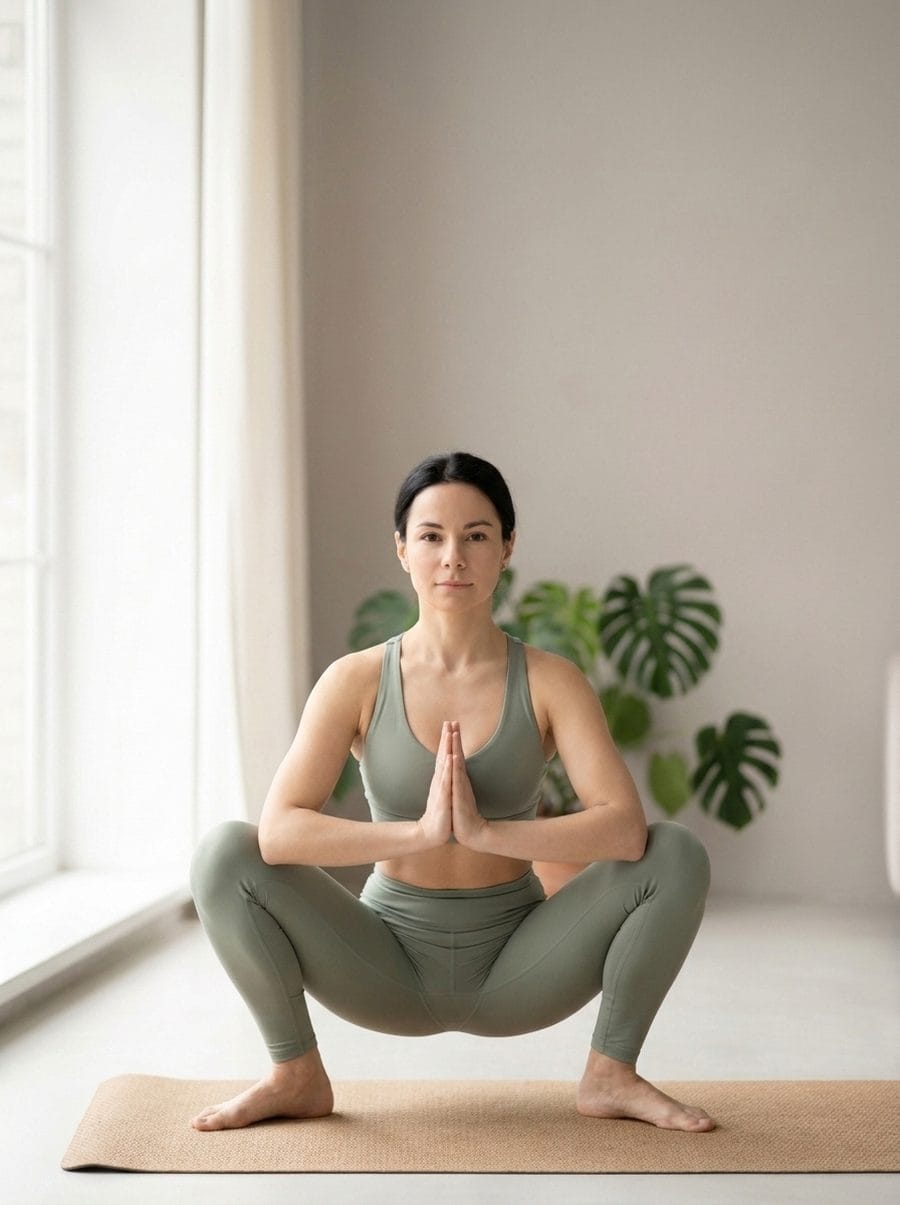
Your hip joint is built to move in every direction, yet everyday life uses only a small slice of that range: you sit, you walk, you climb stairs. Little by little the range shrinks, and you start to feel a pull in your groin one day and in your lower back the next.
Hip opening yoga gives the joint back its freedom in every direction. Below are 10 poses, a ready-made 20-minute routine, and the one rule that matters most: protect your knees.
What "opening your hips" actually means
In yoga, the phrase describes work on the mobility of your hip joints. The joint has four main directions of movement, and a well-rounded practice covers all of them:
- Flexion and extension. Forward folds, plus lunges in which the back leg gets a stretch along the front of its thigh.
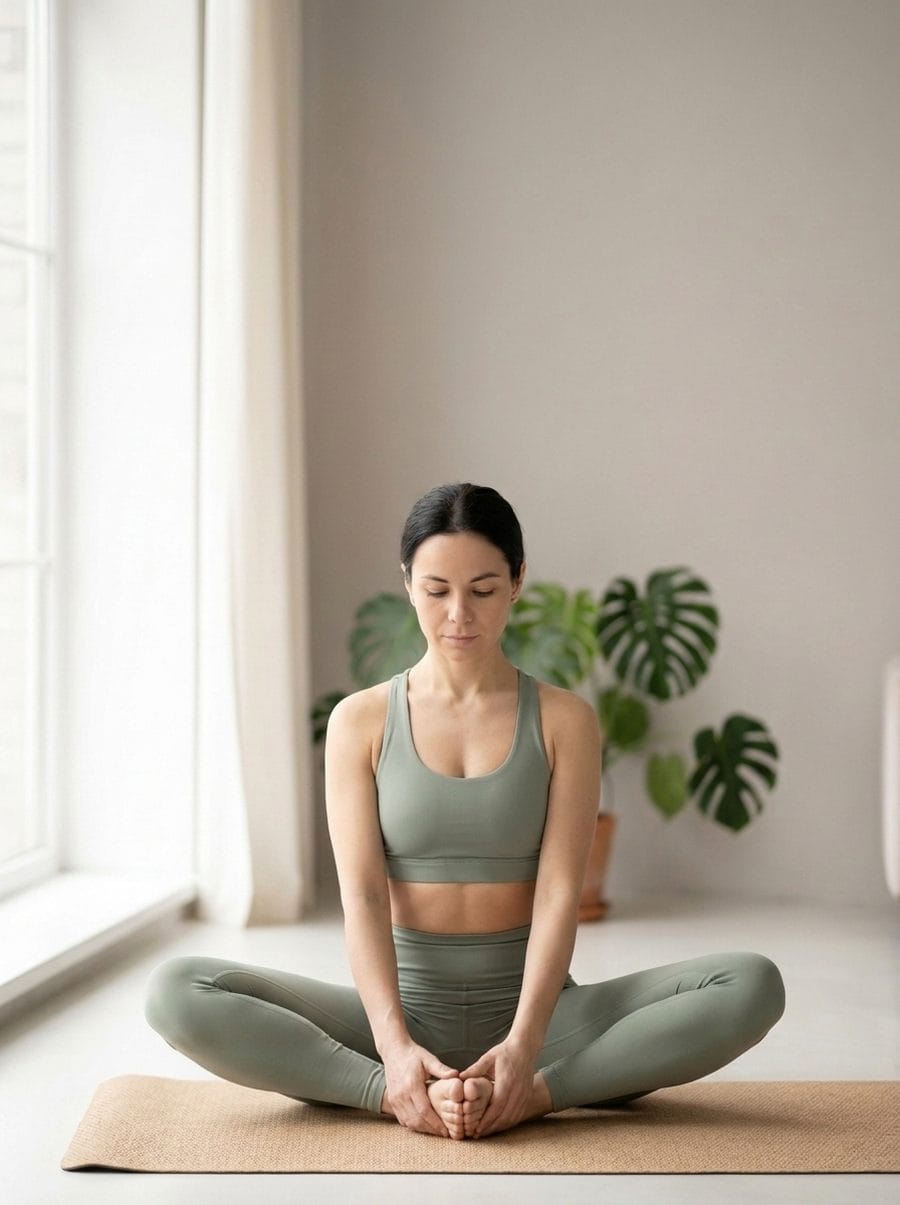
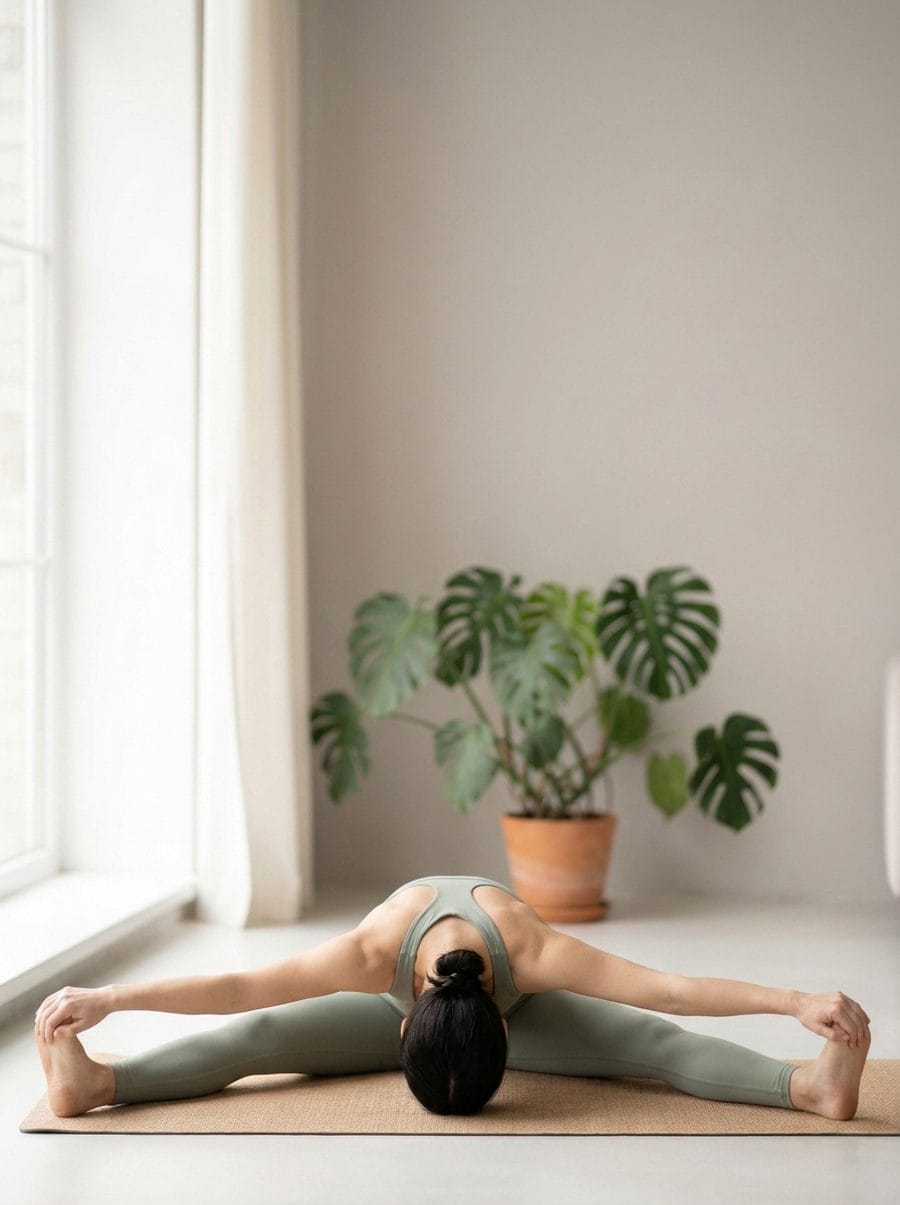
- Abduction. Taking the legs out to the sides: wide-legged folds, Butterfly Pose, Goddess Pose.
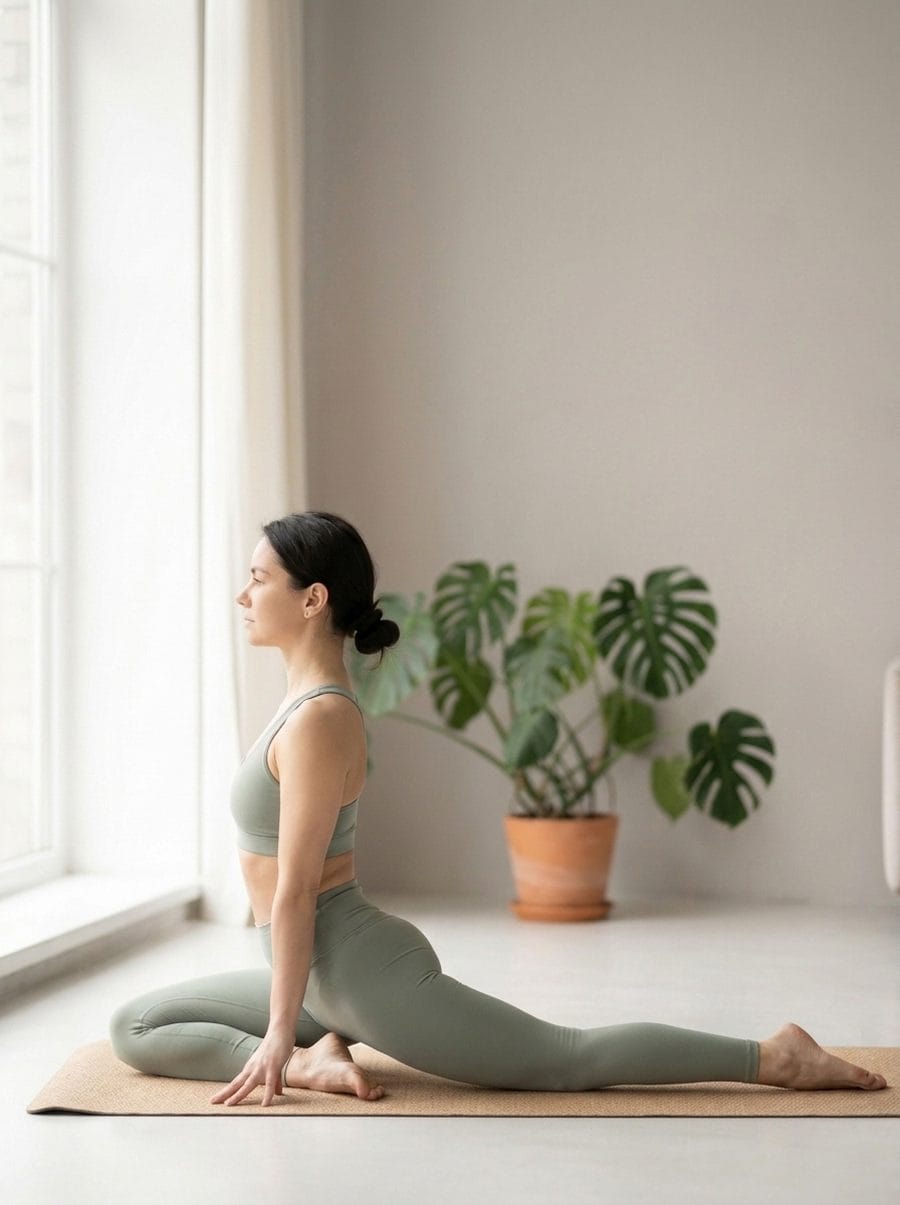
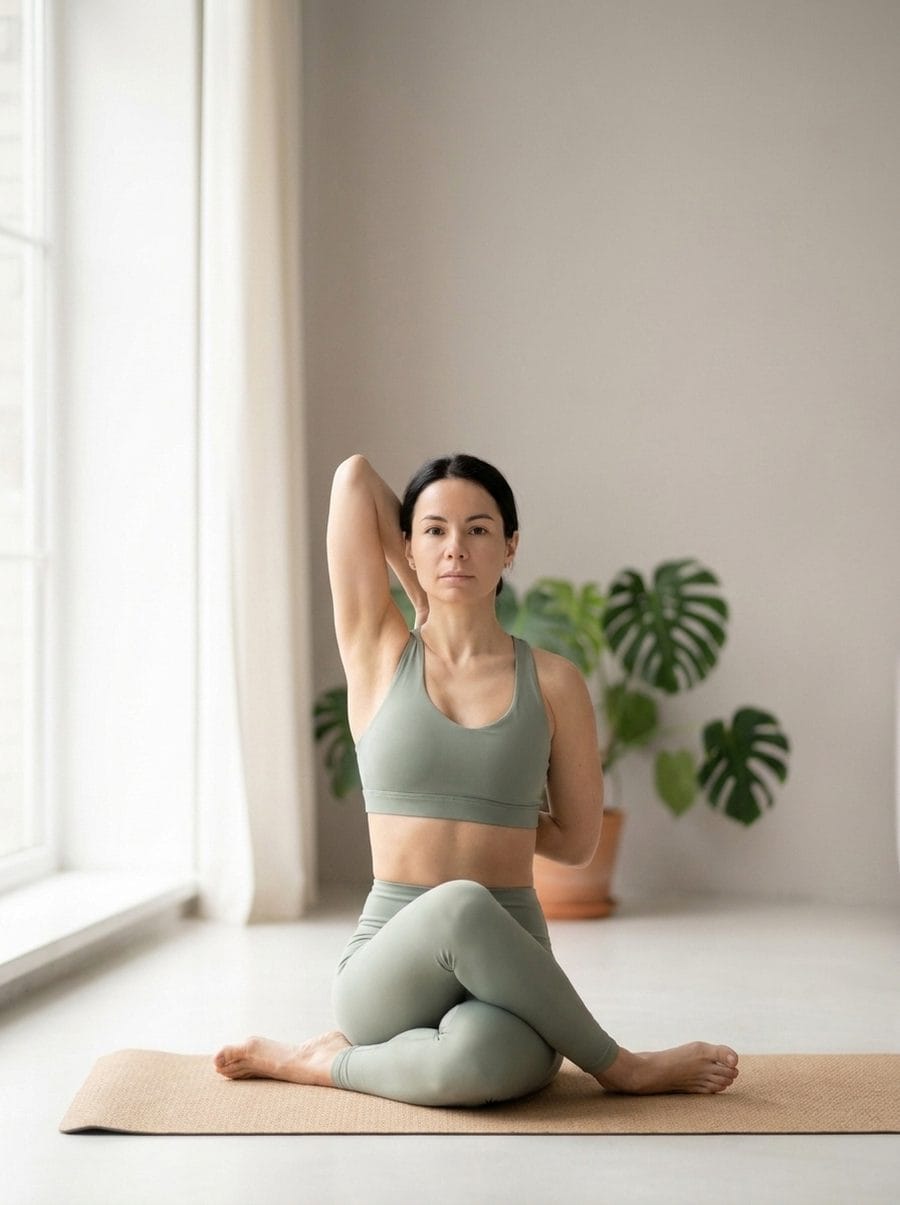
- External rotation. The knee turns outward: Pigeon Pose (Prep), Cow Face Pose, Lotus Pose.
- Internal rotation. The knee turns inward, most often in soft twists lying on your back.
The Hip Opening round follows exactly this logic: five poses that cycle your hips through flexion, extension, abduction and rotation. It works nicely as a warm-up.
Why sitting gives you tight hips
While you sit, your hip flexors stay in a shortened position and your glutes have almost nothing to do. Over the years, your body settles into this as its new normal: your stride gets shorter, your lower back tugs when you bend forward, and sitting cross-legged feels uncomfortable.
Hip openers give the joint the range of motion your day fails to provide.
Hip Opening: a 20-minute yoga routine for hips
The routine from the app is intermediate and follows a clear order. It starts by warming up your pelvis and back, moves on to standing poses (Warrior II, Side Angle Pose), then Garland Pose, Butterfly Pose, Wide-Angle Seated Forward Fold, Pigeon Pose (Prep) and Cow Face Pose, and ends with Happy Baby Pose, Reclining Butterfly Pose and Relaxation Pose.
The reason for this sequence: standing poses warm your legs and hips while they carry weight, and deep passive shapes such as Pigeon come later, once the joints are already warm.
10 hip openers: yoga poses for hips
Warm-up and hip flexor stretches
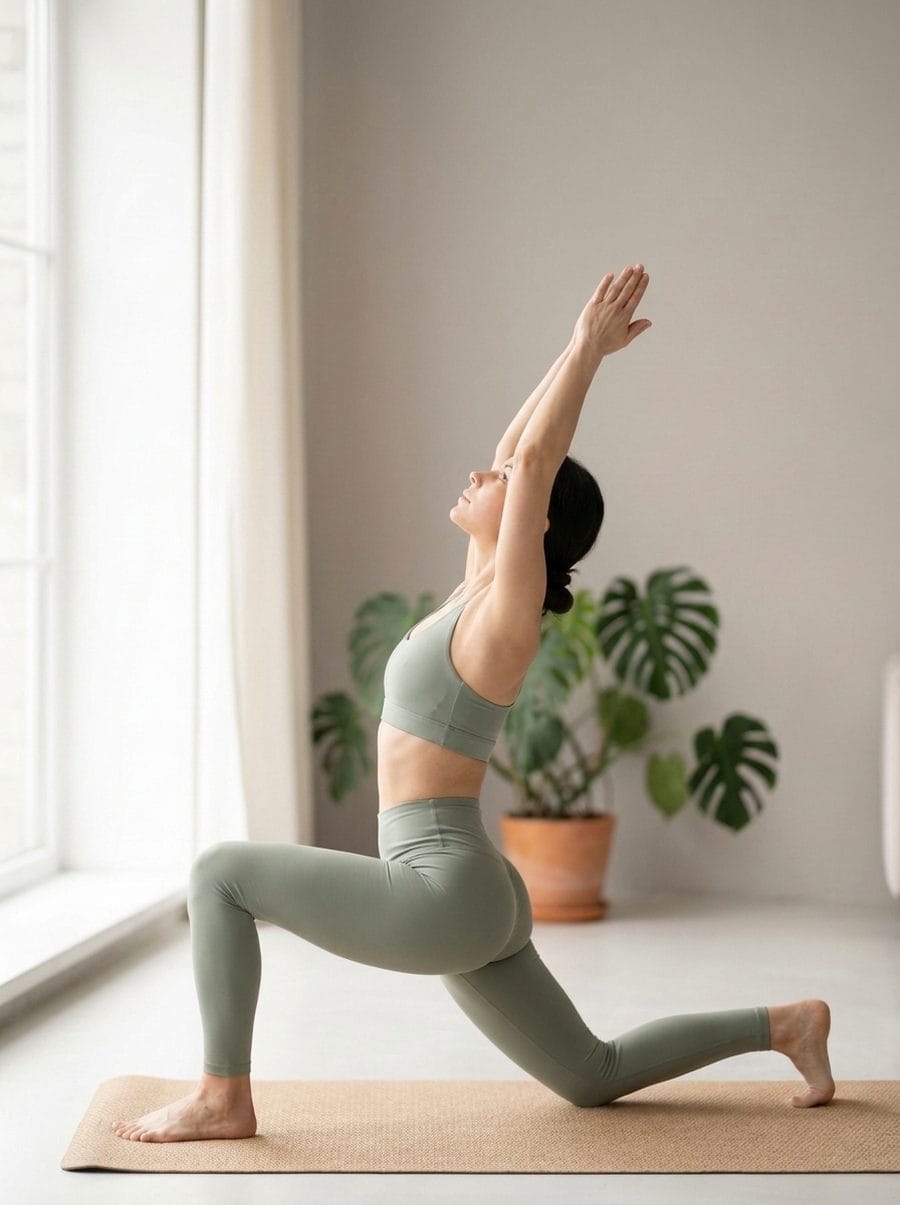
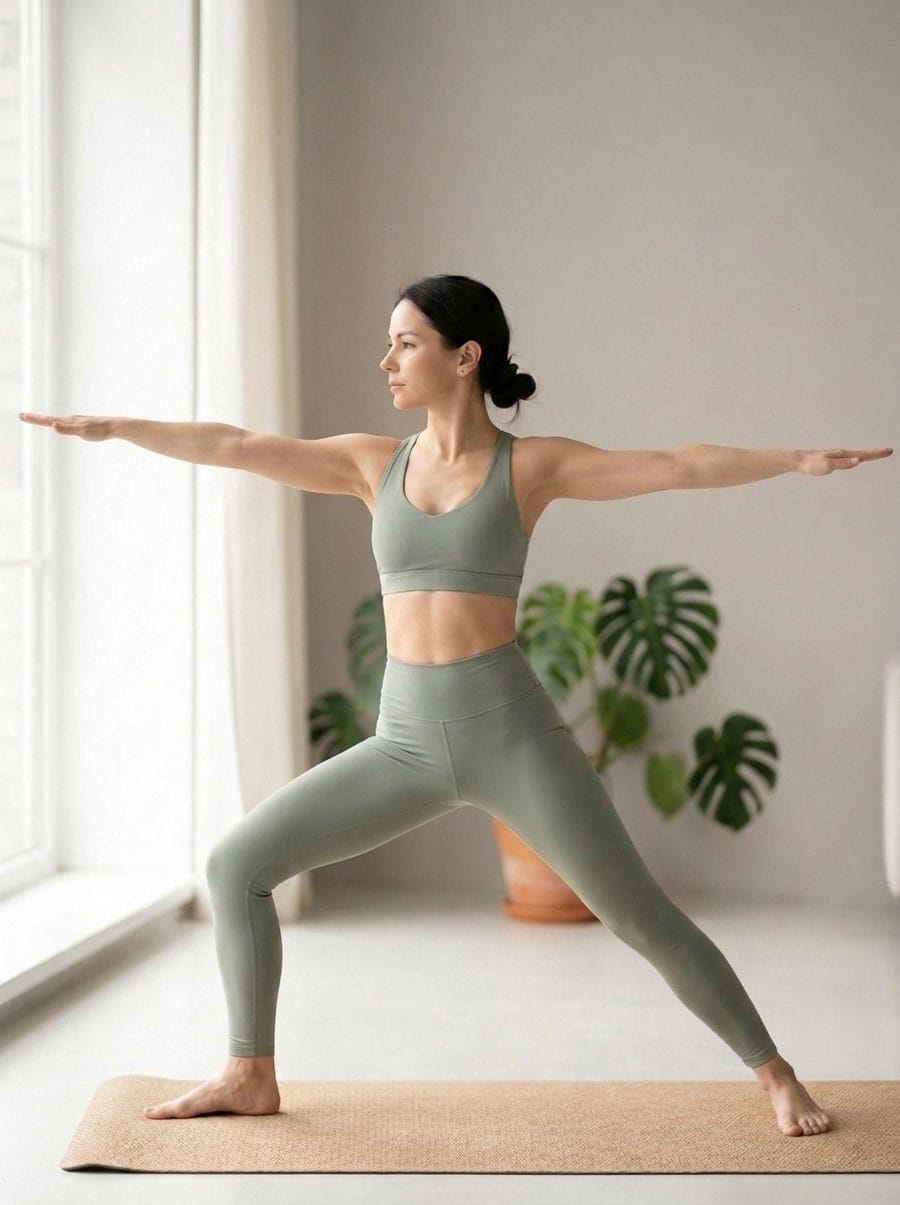
Hip Circles warm up your lower back and hip joints. Low Lunge stretches the hip flexors of your back leg, the muscles that tighten the most from sitting. Warrior II opens your hips outward while your legs bear weight.
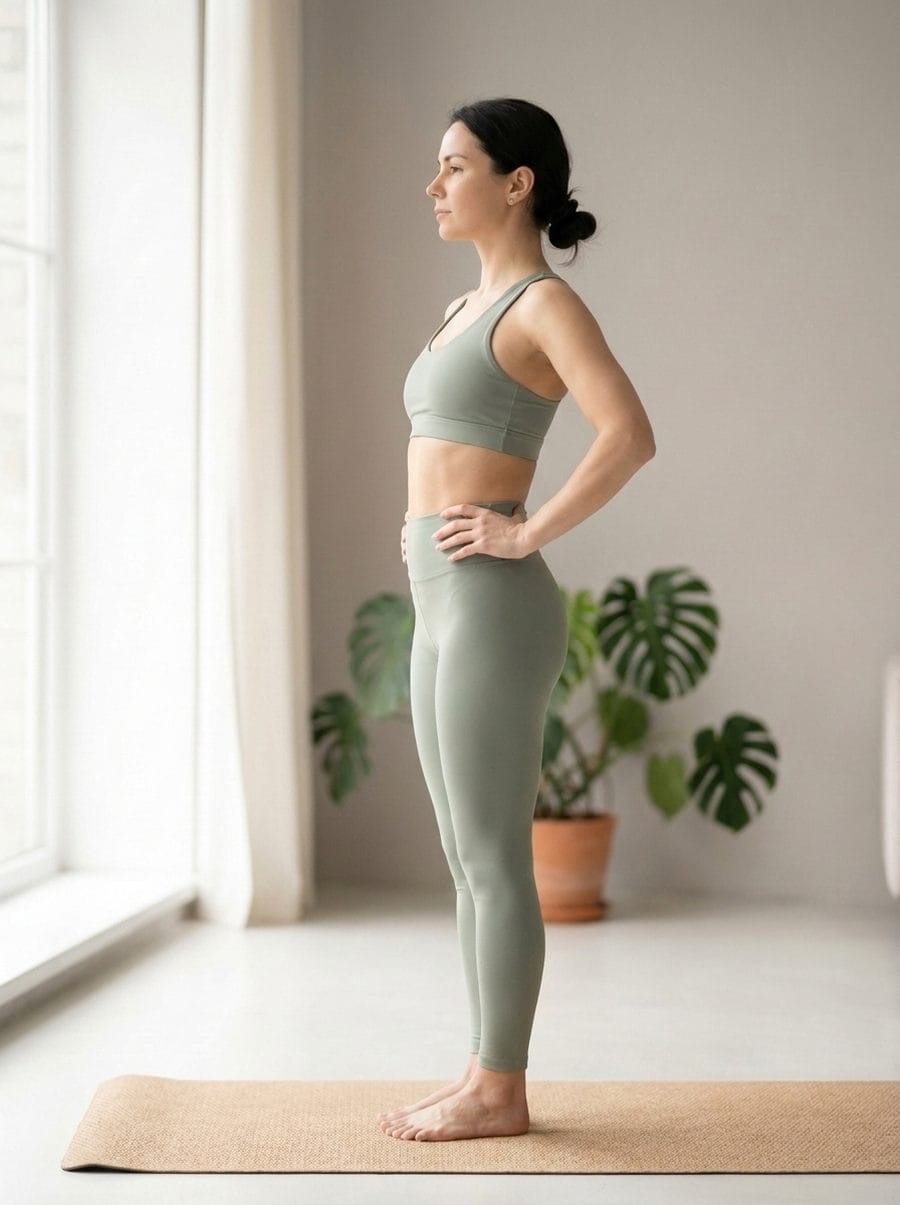
Abduction: legs wide
Garland Pose opens your hips in a deep squat and lengthens your lower back. Butterfly Pose and Wide-Angle Seated Forward Fold both stretch the inner thighs.
External rotation
Pigeon Pose (Prep) ranks among the deepest hip openers there are. Cow Face Pose works your hips and shoulders in one go. Both call for close attention to your knees: if your knee feels at all uncomfortable, come out of the pose right away.
Relaxation
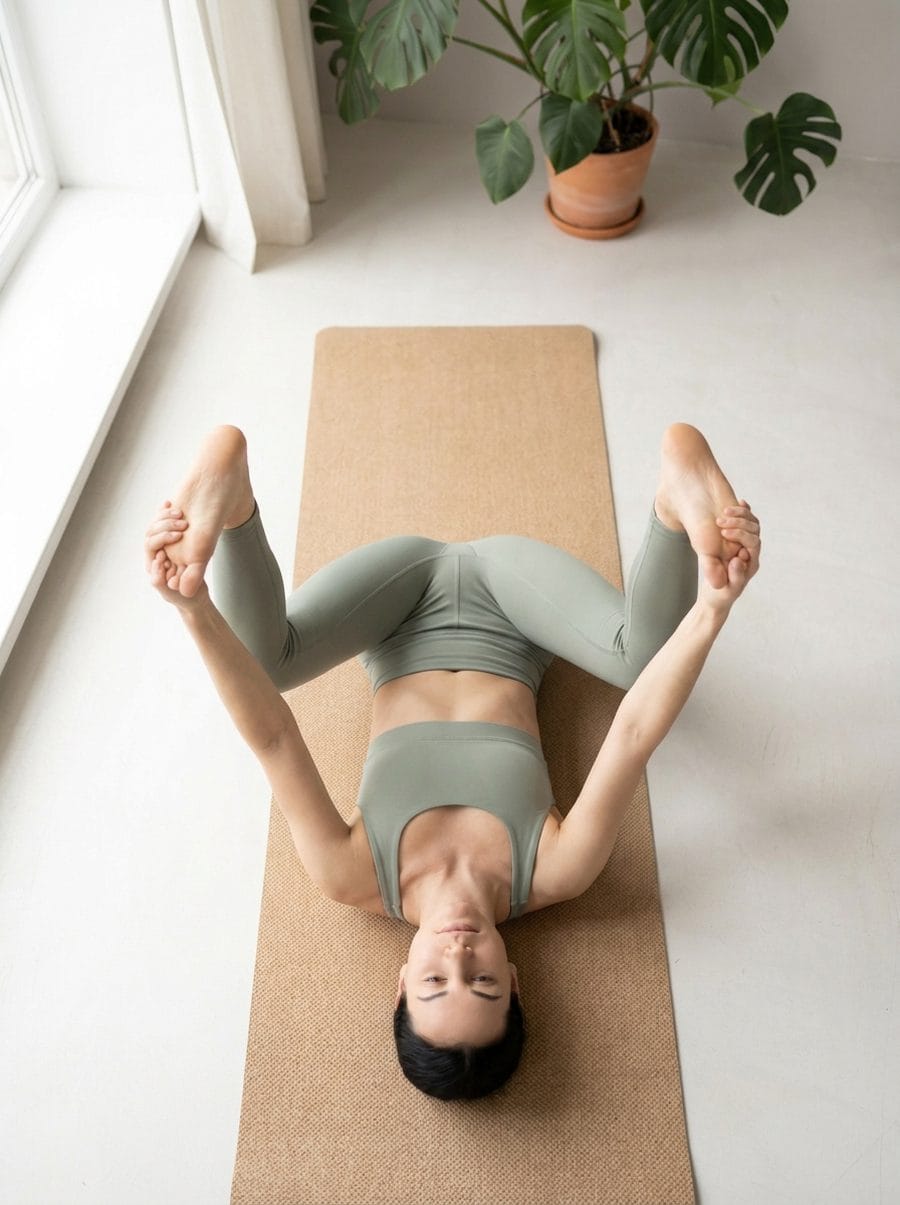
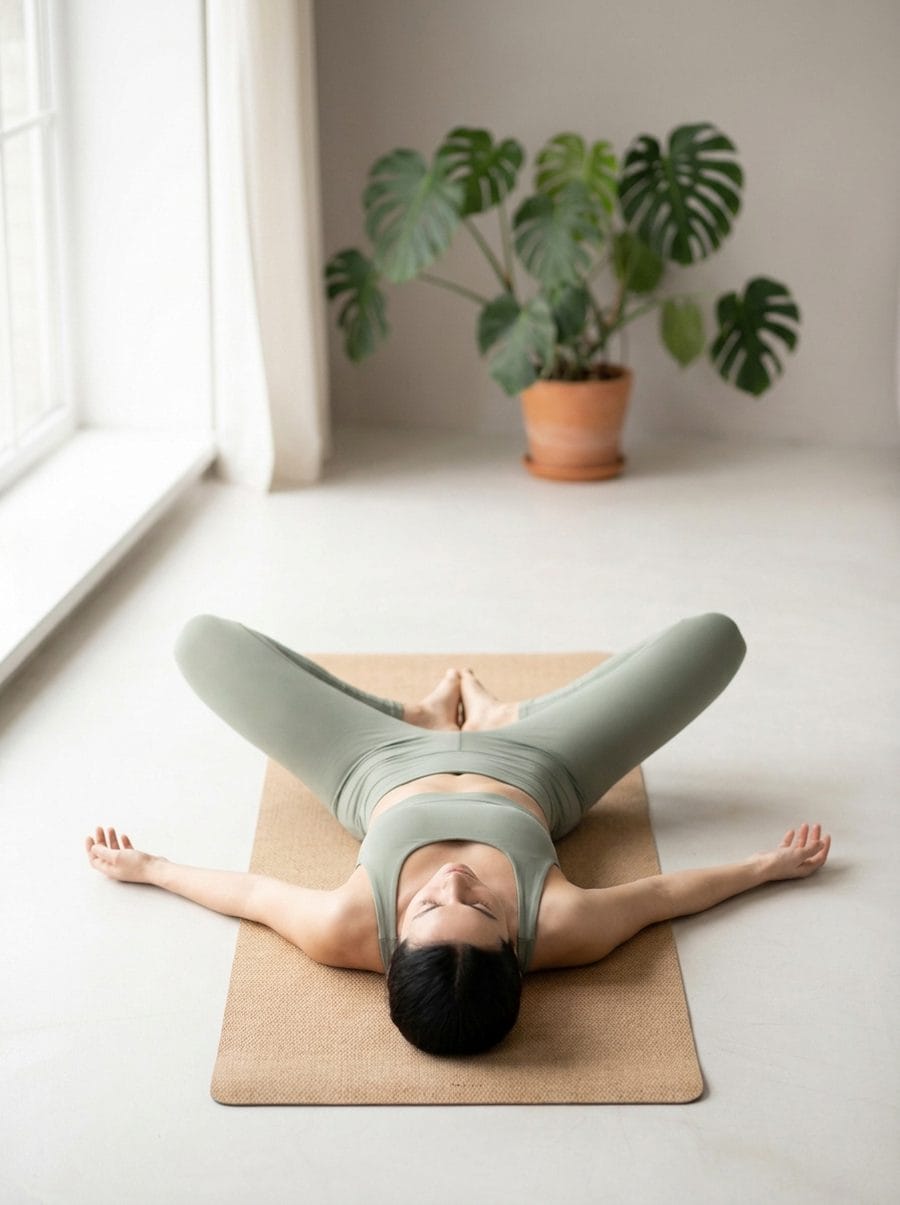
These two poses on your back are passive: your hips open under the weight of your own legs, with no effort from you. They make a good ending to any practice.
Your knees: the one rule that matters most
When the hip joint is stiff, the movement goes looking for another outlet, and very often it finds the knee. That's why, in any hip opener, your knee should never hurt or feel twisted.
- In Pigeon Pose (Prep), bring your front foot closer to your pelvis until your knee is happy. If you have a knee injury, swap Pigeon for a Supine Twist with your knee drawn to your chest.
- In Butterfly Pose and Cow Face Pose, place props under your thighs or sit on a folded blanket.
- Skip Garland Pose, Warrior II and also Side Angle Pose from the routine if a knee is injured.
- Never force Lotus Pose. Getting ready for it takes months.
Path to Lotus
If your goal is to sit in Lotus Pose (Padmasana), the app has an advanced 30-minute program called Path to Lotus. It prepares your knees, feet and hips step by step, moving from lunges and Butterfly Pose to Half Lotus Pose and Lotus Pose. Begin it only once the Hip Opening routine feels easy.
How often to do hip openers
Two or three 20-minute sessions a week are enough to notice, within a few weeks, that your stride feels looser and sitting on the floor is more comfortable. A brief hip warm-up works as a daily habit. When most of your day is spent sitting, yoga for back pain complements it well, and for overall flexibility try stretching for beginners.
Safety
Leave out Wide-Angle Seated Forward Fold if you've injured your inner thigh or have a herniated disc in your lower back. Skip Happy Baby Pose in late pregnancy. If your lower back hurts, don't deepen the backbend in Low Lunge and keep your torso upright. Scroll down for the full set of cautions, pose by pose.
Pose cautions in this article
- Knee injuries — place a blanket under your back knee (Low Lunge)
- Lower back pain — don't deepen the backbend; keep your torso upright (Low Lunge)
- Knee injuries (Warrior II, Garland Pose)
- If your heels don't reach the floor, place a blanket under them (Garland Pose)
- Groin and knee injuries — place supports under your thighs (Butterfly Pose)
- Inner thigh injuries (Wide-Angle Seated Forward Fold)
- Herniated discs in the lower back (Wide-Angle Seated Forward Fold)
- Knee injuries — do a Supine Twist with your knee to your chest instead (Pigeon Pose (Prep))
- Shoulder injuries — use a strap (Cow Face Pose)
- Knee injuries — sit on a prop (Cow Face Pose)
- Late pregnancy (Happy Baby Pose)
- Groin discomfort — place supports under your knees (Reclining Butterfly Pose)
This site is for general information and is not medical advice. If you have pain, an injury, a chronic condition, or are pregnant, check with a qualified professional before practicing.
Questions
How do you open your hips at home? Begin with Hip Circles, Butterfly Pose and Low Lunge, then move on to the 20-minute Hip Opening routine on two or three days each week.
Why does my groin feel tight in Butterfly Pose? That's your inner thighs being stretched. Slide cushions under your knees and don't push them down with your hands; with time, they'll lower on their own.
How long until your hips feel more open? You'll usually notice the first changes after a few weeks of regular practice. Deep poses like Lotus Pose take months.
Can you do hip openers with knee pain? Only in ways that put no load on the sore knee: lying down and with props. If the pain is constant, see a doctor first.
Sources
- Pose technique and cautions, and the contents of the routines and flows: the Hatha Yoga app. You can read how we check our texts on the How We Prepare Our Content page.
Read next
- Yoga for Arthritis and Osteoporosis: How to Protect Your Joints and Bones7 min read
- Ashtanga Yoga Explained: The Series, the Breath and the Difference from Hatha6 min read
- Ayurveda Explained Simply: The Basics and a Daily Routine (Dinacharya)5 min read
- Balance Exercises: 10 Yoga Poses for Balance and Stability7 min read